




Acacia Bandubola Mbongo, the Democratic Republic of the Congo's Minister of State for Hydrocarbons, has given fuel depot operators in Kinshasa one month to bring their facilities into compliance with safety and operating regulations.
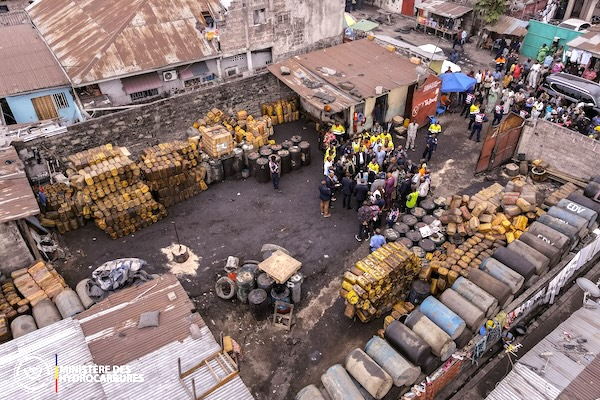
The order came after she inspected several petroleum storage sites in the communes of Kalamu and Limete on June 9, 2026.
According to the Ministry of Hydrocarbons, depots located within residential neighborhoods will have to be relocated. The government plans to identify a site in the commune of N'sele to accommodate the facilities, with the aim of reducing risks to nearby residents.
The measure primarily targets fuel depots operating near homes that fail to meet safety requirements. The minister said petroleum facilities can no longer operate outside the regulatory framework, particularly when they pose fire, explosion or pollution risks in densely populated areas.
"There will be no more disorder in this strategic sector," Bandubola said during the tour. She stressed that all depots must comply with regulatory standards and should not be operating in residential neighborhoods.
The visit also included inspections of several companies that use or handle petroleum products, including bakeries Pain d'Or and Pain Vimba and transport company EcoTrans. According to the ministry, only EcoTrans was fully compliant, while the other entities were given one month to bring their facilities and operations into compliance with safety and operating requirements.
Regulatory framework
The inspection was conducted under an existing legal framework. Hydrocarbons regulations adopted on April 19, 2016, subject petroleum storage and warehousing facilities to registration requirements, prior authorization, technical inspections, insurance coverage, and compliance with environmental, health and safety standards.
The regulations also stipulate that petroleum transport and storage activities may only be carried out under an authorization or permit, depending on the volumes involved. Operators must possess the required administrative documents, proof of ownership or a lease agreement, insurance covering operational risks, and a technical inspection report for their facilities.
Projects related to hydrocarbons activities, including transport, storage and distribution infrastructure, are also subject to environmental and social impact assessments and environmental and social management plans.
The regulations further impose safety obligations on operators. Companies must implement risk-prevention measures, maintain firefighting equipment, keep an up-to-date inventory of safety systems and ensure hygiene and protection standards appropriate to petroleum-related hazards.
Penalties for failing to comply with downstream petroleum regulations range from administrative fines to suspension of operating rights, non-renewal of licenses, license revocation or the demolition of facilities at the operator's expense.
Fire
In February 2026, following a fire at a fuel depot in the Socopao neighborhood of Limete, authorities launched an inspection campaign targeting petroleum storage facilities across the commune.
During that operation, the mayor of Limete provided the minister with a list of active fuel depots and their locations. The ministry subsequently ordered checks on safety compliance and permits related to fuel storage and distribution, while warning that sanctions would be imposed on non-compliant facilities.
The issue of relocating fuel depots away from residential areas is not new. As early as 2024, authorities had raised the possibility of moving certain unauthorized petroleum storage facilities that were operating under conditions considered hazardous to nearby residents.
The ministry has not yet disclosed how many depots will be affected, when the relocations will take place or how the future site in N'sele will be developed.
Boaz Kabeya