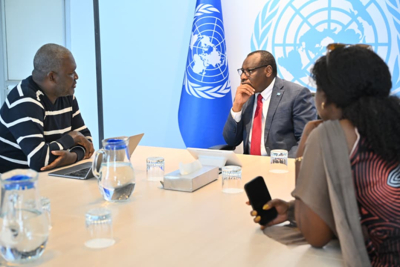





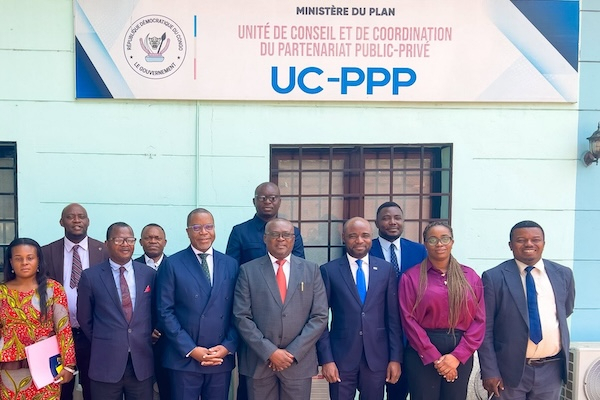
The Democratic Republic of Congo is seeking to increase the participation of local businesses in major public projects carried out through public-private partnerships (PPPs). The issue was at the center of a June 2 meeting between the Agency for the Promotion of Congolese Middle Classes (APROCM) and the Public-Private Partnership Advisory and Coordination Unit (UC-PPP).
According to APROCM, the two institutions met to develop a framework that would facilitate access for Congolese small and medium-sized enterprises (SMEs) to opportunities generated by large PPP projects.
The collaboration is expected to include the development of a joint roadmap and the establishment of a joint monitoring team, with the aim of better integrating national SMEs into contracts linked to major public projects.
Access to Markets
Among the approaches discussed are reserved quotas for Congolese SMEs, subcontracting opportunities for local startups, and knowledge-transfer initiatives tied to major infrastructure projects.
These mechanisms are intended to prevent PPP projects from benefiting only large companies that already possess substantial technical, financial, and organizational capacity. They are designed to provide local SMEs with gradual access to more structured markets while strengthening their capabilities.
APROCM Director General Tchelo Mazombo Pascal said the objective is to enable Congolese entrepreneurs to learn alongside major corporations through the exchange of expertise. He described the approach as a way to accelerate the development of the national business ecosystem.
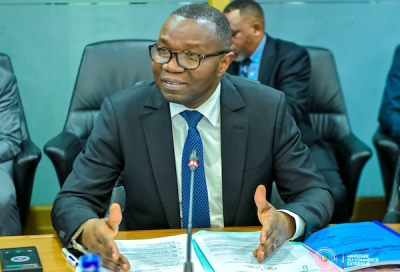
UC-PPP Director General François Ngenyi said the initiative could contribute to job creation and support the emergence of Congolese entrepreneurs capable of playing a more active role in the country's major economic projects.
Implementation Expected
The framework remains to be defined in detail. APROCM's communication does not yet specify the quotas under consideration, the eligibility criteria for SMEs, the PPP projects concerned, or a timeline for implementation.
The initiative is linked to the presidential program Debout Jeunes Congolais, whose launch is scheduled for June 30. In February, the government referred to a financing package of between $650 million and $1.3 billion to be mobilized over six years to support youth employment and entrepreneurship.
The challenge now will be to translate this policy direction into binding and measurable mechanisms. For Congolese SMEs, access to PPP opportunities will depend not only on reserved quotas or contract packages, but also on their ability to meet the technical, financial, and governance requirements associated with major public projects.
Ronsard Luabeya