





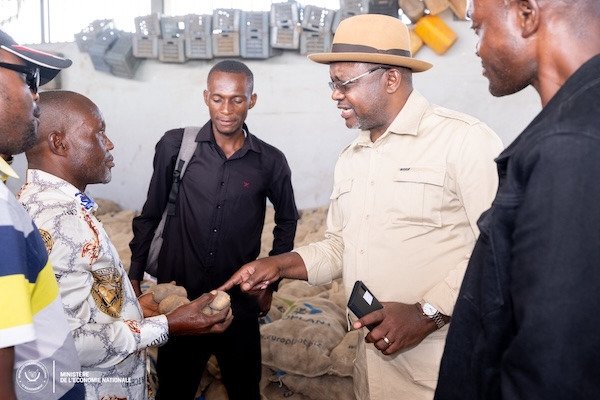
DR Congo's Economic Regulation Fund (FOREC) launched a potato seed subsidy program on May 14, 2026, in Mbanza-Ngungu, Kongo Central province, to support the revival of local production.
According to a statement from the Ministry of National Economy, the initiative supports the Nsimabani Vegetable Growers' Cooperative Union, which brings together 11 agricultural associations, through a project submitted to FOREC.
The program aims to support local producers, improve domestic potato supply and gradually reduce dependence on imports. FOREC Executive Secretary Jean-Paul Nemoyato said the initiative marked a pilot phase that could lead to broader support measures in the coming years.
The launch follows the signing in Kinshasa of a memorandum of understanding between stakeholders involved in developing the potato sector.
Earlier initiatives in Mbanza-Ngungu
Mbanza-Ngungu has already hosted several initiatives aimed at reviving potato cultivation. In January 2026, Frico Agri Art and the cooperative Viva Kongo signed a partnership agreement to strengthen production through certified seeds, enhanced technical support and the use of Dutch agricultural technology.
The partnership includes a 10-hectare pilot cultivation phase in 2026 aimed at improving yields, reducing post-harvest losses and increasing potato availability in local markets.
The area had previously been selected for agronomic trials linked to industrial processing. In July 2025, the Congolese Press Agency (ACP) reported encouraging results after three months of trials using seeds supplied by Italian company Amica Chips. Some varieties performed well, while others required further evaluation.
During the visit, Muhindo Nzangi, then Minister of State for Rural Development, said the objective was to identify the most suitable varieties, strengthen agricultural cooperatives and prepare the ground for a future local potato processing unit.
With FOREC's latest intervention, the sector has received additional public support focused on access to seeds. The main challenge now will be turning these pilot projects into sustained production capable of supplying domestic markets and eventually supporting a local processing industry.
Ronsard Luabeya