




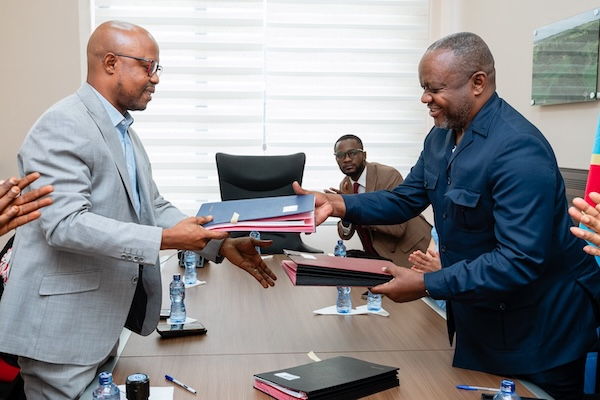
The Democratic Republic of Congo’s Ministry of National Economy has announced $7.7 million in funding for an agricultural program in Sud-Ubangi province in northwestern DRC. According to a statement published on April 16, 2026, the project will be implemented in partnership with Centre de développement intégral Bwamanda (CDI-Bwamanda).
The ministry said the program aims to boost local production and improve food security by supporting farmers, strengthening corn and soybean supply chains, and upgrading rural roads. It will also reinforce the value chain from production to markets in Kinshasa, the country’s main market.
The initiative is part of a broader strategy to curb the high cost of living, boost local economic activity and position agriculture as a key sector of the economy.
CDI-Bwamanda, the implementing partner, is a development NGO founded in the region in 1969. It follows a holistic approach combining agriculture, health, education, community development and technical support, with the aim of improving living standards and promoting economic independence.
The program comes alongside another ongoing agricultural initiative in the province. Since April 6, 2026, Sud-Ubangi has been part of the Integrated Program for Reducing Emissions from Deforestation and Forest Degradation (PIREDD), backed by a $25 million budget.
Funded by the Central African Forest Initiative (CAFI) through the national REDD+ fund (FONAREDD) and implemented by Belgian agency Enabel from 2026 to 2030, the project focuses on balancing agricultural production with forest conservation. PIREDD includes support for sustainable farming practices, agroforestry development, and perennial crops such as coffee and cocoa.
Ronsard Luabeya