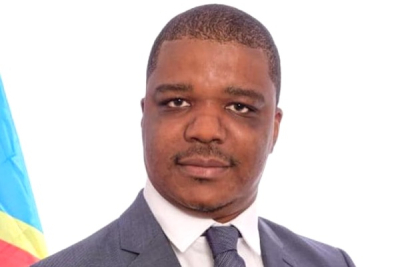





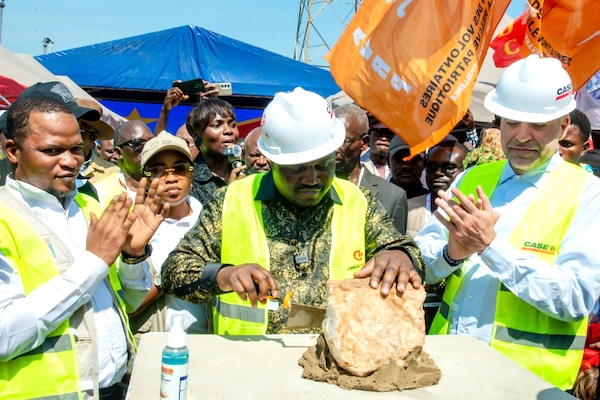
Congo Motors and U.S. agricultural equipment brand Case IH plan to launch the first phase of a local tractor assembly plant in the Democratic Republic of Congo before the end of 2026. On June 5, Minister of State for Agriculture and Food Security Muhindo Nzangi Butondo presided over the groundbreaking ceremony for the assembly plant in Kinzalandi, in the Mbanza-Ngungu territory of Kongo Central province.
According to the agriculture ministry, the facility is led by Congo Motors, with Case IH providing technological support. In its first phase, the plant will focus on tractor assembly. The aim is then to gradually increase the share of local manufacturing, in order to develop a national agricultural equipment supply chain and reduce dependence on imported machinery.
The project is part of the government's agricultural mechanisation strategy. The ministry estimates that the DRC needs around 5,000 tractors per year to meet producers' needs, improve yields and support the transformation of the rural sector. The government says it has already placed a firm order for 3,000 tractors destined for agricultural producers across the country. That order could represent one of the first outlets for the future assembly unit.
Local maintenance
Beyond assembly, the project is also intended to address the challenge of maintenance. According to the ministry, many tractors acquired in recent years have remained idle due to a lack of qualified technicians or available spare parts. The future facility is therefore expected to include a training centre for specialist technicians, a maintenance service and a spare parts supply system. The aim is to extend equipment service life and prevent tractors distributed to producers from falling out of use.
Congo Motors is already established in the DRC in the distribution of vehicles, equipment and after-sales services. Its involvement in the project marks an attempt to move from distributing imported equipment toward a first local industrial capacity in agricultural machinery. Case IH, an international brand specialising in agricultural equipment, is to provide technological support for the project.
For Kinshasa, the collaboration is intended to gradually build local expertise in assembly, maintenance and, eventually, the manufacture of certain components. At this stage, authorities have not yet released details on the project's total cost, the plant's initial annual capacity, the exact share of components to be produced locally or the timeline for scaling up toward fuller manufacturing.
Ronsard Luabeya