




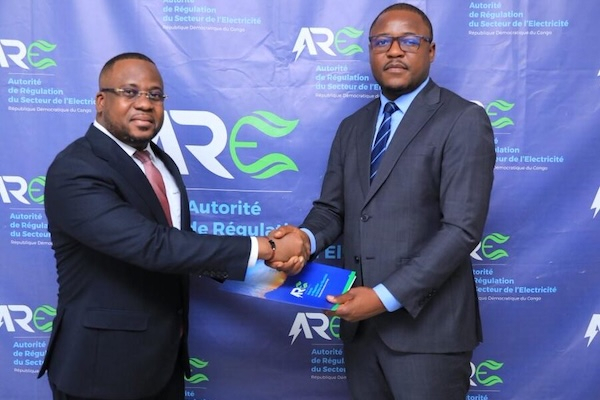
The Electricity Regulatory Authority (ARE) has approved two applications submitted by Beijing-based Green World Energie for a solar photovoltaic project in the Mutshatsha area of Lualaba province.
The project will have an installed capacity of 200 megawatt-peak (MWp) and include a battery storage system with a capacity of 581 megawatt-hours (MWh). It is designed to supply a steady 30 megawatts of power to the Kamoa-Kakula copper complex.
Kamoa Copper, the operator of the complex, signed a power purchase agreement with Green World Energie in early April 2025.
One of the approvals concerns an independent power producer licence, while the second covers the sale of electricity within the province. The authorisations were issued to Trésor Maneno, legal counsel for Green World Energie, clearing the way for the Minister of Energy to formally grant the production and sales licences.
Construction of the project has already begun ahead of the issuance of the licences. According to a project status report published in late October, construction was 46% complete at that time. Commercial commissioning is scheduled for the second quarter of 2026.
The project runs in parallel with another solar-plus-storage development led by Nairobi-based CrossBoundary Energy DRC. Together, the two projects are expected to provide the Kamoa-Kakula complex with 60 MW of continuous power. CrossBoundary Energy DRC signed a power purchase agreement and launched construction at roughly the same time as Green World Energie. As of late October, construction on its project was 42% complete, with commercial commissioning also planned for the second quarter of 2026. The status of its regulatory approvals remains unclear.
Electricity demand at the Kamoa-Kakula copper complex is expected to rise sharply in the coming years. According to projections published by developer Ivanhoe Mines, total demand is forecast to reach 347 MW by December 2028, up from 208 MW in December 2025. Under the company’s procurement plan, all of that power is expected to come from renewable sources.
Boaz Kabeya