




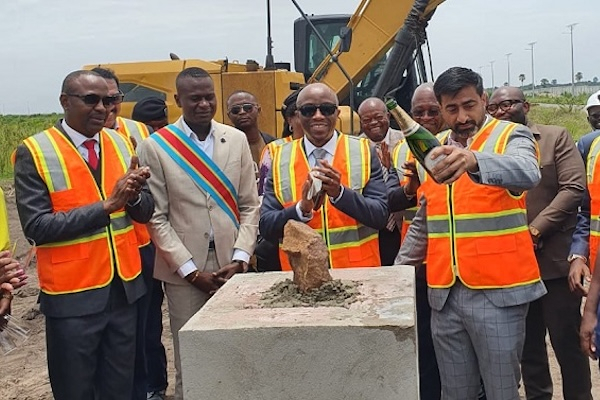
Shalina Healthcare held a groundbreaking ceremony on March 16, 2026, for a pharmaceutical manufacturing plant in the Kin-Malebo special economic zone, located in the N'Sele commune of Kinshasa. According to the Congolese Press Agency (ACP), construction is set to begin on May 1, 2026, with construction expected to last 20 months and completion scheduled for January 5, 2028.
ACP reported that the project is part of a broader strategy to strengthen local pharmaceutical production in the Democratic Republic of Congo. Group Managing Director Abbas Virji said the initiative aims to reduce the country's dependence on imports and improve access to medicines.
Shalina Healthcare says it has been present in the DRC for more than 40 years. According to its website, the company operates more than 30 distribution points in the country, including in Kinshasa, Lubumbashi, Goma, Bukavu, Matadi and Kisangani, and sells more than 200 prescription drugs, over-the-counter products and consumer health brands. It adds that it relies on WHO-approved production facilities in India and China for its international supply chain.
Local pharmaceutical production remains limited in the DRC, despite the existence of a few manufacturing units. Official records list Pharmakina, based in Bukavu, among the facilities authorized to produce locally, along with the Phatkin laboratory in Kinshasa. Pharmakina is a longstanding producer of quinine and cinchona-derived products. Other market players, such as Pharmans, focus on import, distribution and pharmaceutical promotion, with no reference to local manufacturing in their company information.
In this context, Shalina's project adds to existing local capacity and underscores efforts by Congolese authorities and private investors to expand domestic pharmaceutical production. Its location in the Kin-Malebo special economic zone is part of broader efforts to develop industrial infrastructure around Kinshasa.
Ronsard Luabeya