




The launch of an interbank electronic payments group in the Democratic Republic of Congo (DRC) is expected by the end of March 2026. The IMF mentions this in its January country report on the DRC.
An interbank electronic payments group is a shared arrangement set up by banks, and sometimes the central bank, to jointly organize and manage electronic payments at the national level. It allows institutions to use common standards so that transactions move more smoothly from one bank to another. In its report, the IMF describes this launch as a key step in the modernization of the payments system.
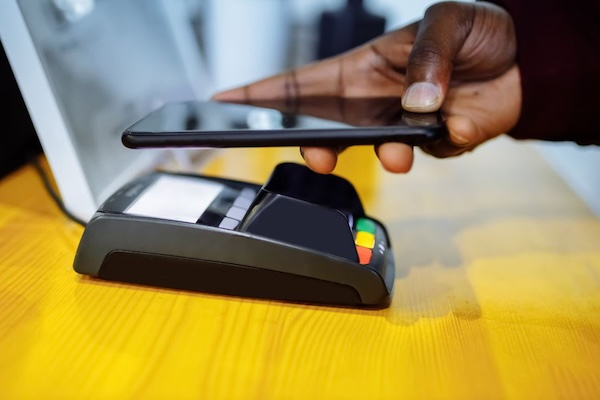
In many countries, this type of interbank arrangement ensures interoperability, meaning that a customer of bank A can send money to a customer of bank B without friction. It manages shared infrastructure such as the national switch, clearing, and transaction routing. It can also deploy common services, including instant transfers, card or QR-code payments, and transfers across banks, microfinance institutions, and mobile money operators. In addition, it sets technical and security standards on cybersecurity and fraud prevention, while harmonizing certain fees and procedures.
To ensure “an orderly rollout consistent with technical and institutional requirements,” the establishment of the interbank electronic payments group in the DRC is being carried out with support from the International Finance Corporation (IFC), the World Bank Group’s private-sector arm.
In the DRC, financial inclusion rose from 38.5% in 2022 to 50% currently, mainly due to the expansion of mobile payment solutions. This progress is part of the National Financial Inclusion Strategy 2023-2028, adopted by the government in July 2023, which relies on strengthening payment infrastructure and tools. The report specifically cites the commissioning of the national electronic payment switch and the gradual interconnection of banks, microfinance institutions, and electronic money issuers.
The report adds that the launch of a platform called Visa Pay in September 2025, alongside the promotion of the Mosolo national card denominated in local currency, is part of these efforts aimed at “improving the range of digital financial services.”
Boaz Kabeya