




The Democratic Republic of Congo has begun a review of road PPP contracts worth $4.419 billion as authorities assess the financial balance of 12 concession agreements covering more than 3,600 kilometers of roads nationwide.
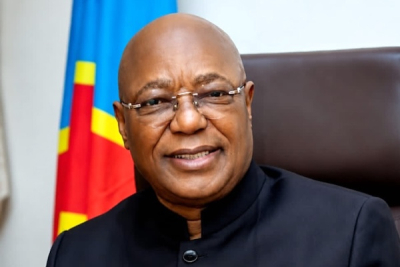
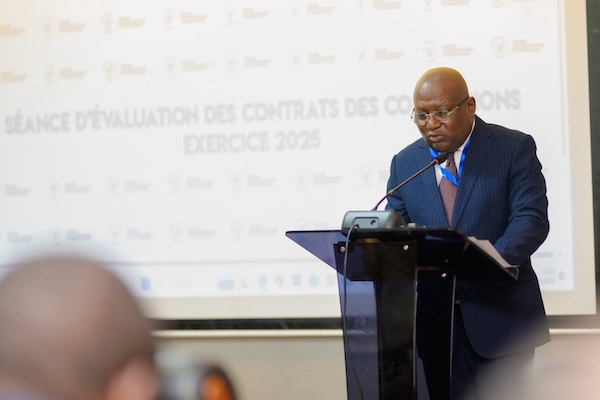
Launched on June 15, 2026, by Infrastructure and Public Works Minister John Banza Lunda, the review will compare investments made and revenues collected to determine whether compensation is owed to concessionaires under the terms of the contracts.
The portfolio under review is managed by the Congolese Agency for Major Works (ACGT) in its role as delegated implementing agency. The contracts primarily involve the construction and upgrading of 3,350 kilometers of national roads and 250 kilometers of urban roads.
The routes concerned include Kinshasa-Matadi, Lubumbashi-Likasi-Kolwezi, Lubumbashi-Kasumbalesa, Kasumbalesa-Sakania, Kalemie-Manono, Tshikapa-Kamako, Likasi-Borne 32, Kisangani-Miti, Kolwezi-Sakabinda and Bukavu-Kitutu. The Kasangulu bypass road project is also among the projects under review.
Revenues and Works
According to figures presented at the opening of the review, revenues collected and reported by concessionaires reached $320.7 million in 2025. Some concessions recorded notable growth, particularly the Kasumbalesa-Sakania and Likasi-Kambove routes, where revenues reportedly rose by 24% from the previous year.
The physical progress report also points to significant investments in project execution. ACGT reported nearly $360 million in works carried out in 2025. These investments included the expansion of the Lubumbashi-Likasi road to a dual carriageway over 20 kilometers, the construction of 70 kilometers of the Kalemie-Manono unpaved road, the upgrading of the Lwambo-Mitwaba-Manono route with double surface dressing over 148 kilometers, and the opening to traffic of the Likasi-Borne 32 road.
The evaluation extends beyond a review of revenues and construction activity. Over a 10-day period, experts are tasked with comparing completed works against revenues generated to determine the amount of debt, if any, owed by the state to concessionaires. This financial aspect is central to a model in which the financial equilibrium of each concession depends on investments made, toll revenues collected and the contractual obligations of each party.
Minister John Banza Lunda called for a rigorous assessment based on facts, contractual documents and verifiable data. He also stressed compliance with contractual commitments, infrastructure quality and faster project execution.
Constraints of the Model
Preparatory work identified several constraints affecting the concession model. These include delays related to tax and customs exemptions, the impact of third-party seizure notices issued by the tax administration, limited access to financing by some concessionaires and execution delays on several projects.
Insecurity in parts of eastern Congo was also identified as a major obstacle, particularly for projects linked to National Roads 2 and 3. The situation complicates project implementation in areas where mobility and security conditions remain unstable.
At the sector level, several operators are involved in major concessioned road corridors, particularly in Kongo Central, the Katanga region and routes linking the Democratic Republic of Congo with neighboring countries. GED Congo, a subsidiary of GED Africa, is involved in developing the Kasomeno-Kasenga-Chalwe-Mwenda corridor, a strategic project connecting the Democratic Republic of Congo and Zambia.
Beyond the annual review, the evaluation reflects the government's intention to strengthen oversight of road PPPs. For Kinshasa, the challenge is twofold: accelerating work on major transport corridors and reinforcing financial monitoring of concessions to ensure that revenues generated are translated into durable and visible infrastructure for road users.
Ronsard Luabeya