





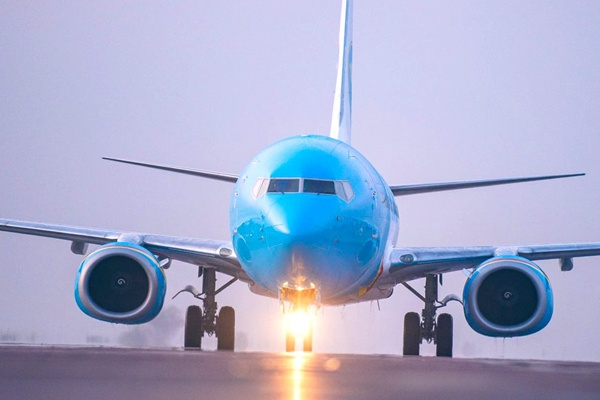
On June 12, 2026, Transport Minister Jean-Pierre Bemba reiterated that Air Congo would launch a direct route between Kinshasa and Brussels on July 1, 2026. He also cited Paris among the carrier's next planned international destinations as part of its network expansion.
However, in its June 9, 2026 update, the European Commission kept airlines certified by authorities in the Democratic Republic of Congo on the list of carriers banned from operating in European Union airspace because of persistent shortcomings in aviation safety oversight.
European regulations nevertheless provide an option for airlines subject to a ban. They may operate flights to the European Union using aircraft from a carrier that is not banned under a lease agreement covering aircraft, crew, maintenance and insurance. The arrangement is commonly known as a wet lease, or ACMI, for Aircraft, Crew, Maintenance and Insurance.
Air Congo plans to use that option through its partnership with Ethiopian Airlines. The Congolese carrier is owned 49% by Ethiopian Airlines and 51% by the Congolese state.
Strategic route
Air Congo has announced that the Kinshasa-Brussels service will be operated with a Boeing 787 Dreamliner provided by Ethiopian Airlines.
In practical terms, the Boeing 787-8 that will operate the Kinshasa-Brussels route, although carrying Air Congo branding, will be supplied by Ethiopian Airlines. The aircraft's crew, maintenance and insurance will also be provided by the Ethiopian carrier.
The launch of the Brussels route represents an important symbolic and commercial milestone. The Kinshasa-Brussels route is one of the most strategic for the Congolese diaspora, the business community and the longstanding political and institutional ties between the Democratic Republic of Congo and Belgium.
Air Congo plans to offer five weekly flights on Mondays, Wednesdays, Fridays, Saturdays and Sundays. The carrier will enter a market currently dominated by Brussels Airlines, which operates direct flights between Kinshasa and Brussels. Travelers also have connecting options through other European and African hubs.
Strengthening oversight
For Congolese authorities, the strategy is a transitional solution. It allows Air Congo to accelerate its international expansion while continuing reforms aimed at improving compliance of the national aviation system with international standards.
ICAO's removal of a Significant Security Concern (SSeC), announced on June 5, is a positive signal. The decision relates to aviation security, including measures designed to prevent unlawful acts and screening and security controls for passengers, cargo and access to restricted areas.
However, it does not by itself resolve the issue of the European Union's aviation safety list. That depends on the assessment of the Democratic Republic of Congo's Civil Aviation Authority (CAA) and its ability to sustainably oversee carriers, airworthiness, operations, maintenance and certification.
In the short term, the partnership with Ethiopian Airlines provides Air Congo with a pathway into the European market. In the medium term, the key challenge for the Democratic Republic of Congo remains strengthening the CAA's oversight capabilities so that carriers certified locally can eventually operate in Europe using their own operating certificates.
Timothée Manoke