




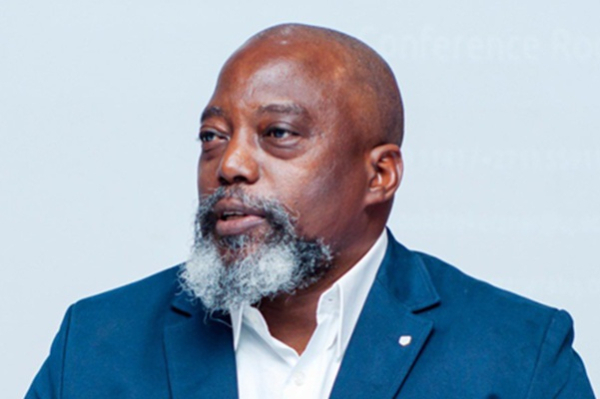
The U.S. Treasury Department, through its Office of Foreign Assets Control (OFAC), has imposed sanctions on former Democratic Republic of Congo President Joseph Kabila, the agency said in late April 2026, citing efforts to counter actors accused of fueling instability in the country’s east.
In a statement, the Treasury said Kabila was sanctioned for “providing support to the March 23 Movement (M23) and the Congo River Alliance (AFC),” which Washington says are driving political instability and violent conflict in eastern DRC.
The department said the former president provided financial support to networks linked to the AFC and encouraged defections from the Congolese armed forces (FARDC), contributing to the worsening security situation in the east. In September 2025, a Congolese court sentenced Kabila to death in absentia on charges of complicity with the AFC/M23.
Defending Washington agreements
Following the designation, all of Kabila’s assets under U.S. jurisdiction have been frozen. U.S. individuals and companies are barred from engaging in transactions with him unless authorized. The measures also apply to entities he owns 50% or more, as well as to transactions that could facilitate financial or material support.
Washington has previously sanctioned military officials, business networks and armed groups linked to the conflict in eastern DRC. Targeting Kabila, however, marks a new step, as the U.S. administration moves against a central figure of the former Congolese government accused of influencing security dynamics in a region rich in strategic minerals.
“Those who continue to sow instability will be held accountable,” Treasury Secretary Scott Bessent said, adding that the United States would use its tools to uphold “the integrity of the Washington Accords,” which are intended to secure access to critical minerals.
“The Treasury Department will not hesitate to take action against groups that deny the United States and our allies access to the critical minerals vital for our national defense,” John K. Hurley, Treasury’s under secretary for terrorism and financial intelligence, said during a previous round of sanctions.
Boaz Kabeya