





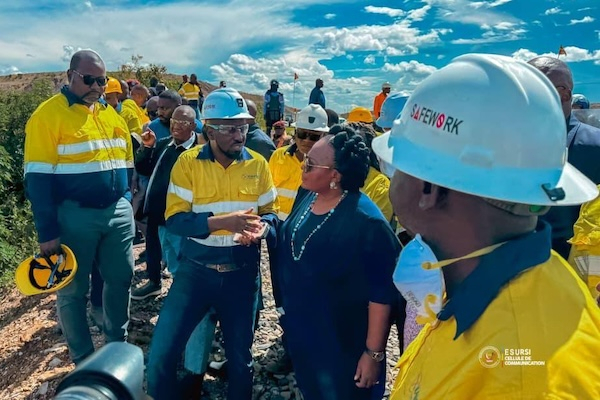
Kamoto Copper Company (KCC), a subsidiary of Glencore, is facing a radiological emergency at its T17 tailings site in Kolwezi, in Lualaba province. The alert was triggered by the discovery of radioactive materials in an area affected by artisanal mining.
The issue was discussed at the Council of Ministers on March 27, 2026. In its communiqué, the government cited an urgent health alert linked to risks of irradiation and radioactive contamination at KCC’s Kolwezi site.
President Félix Tshisekedi stressed the need for a swift, coordinated response to the potential consequences, including risks to workers and nearby residents from radiation exposure, as well as contamination of soil, waterways and the food chain, and local socioeconomic disruption. He asked Prime Minister Judith Suminwa to urgently establish an ad hoc commission to oversee the response and support the necessary health, environmental, technical and scientific measures.
The alert comes as Glencore announced in February 2026 that it had finalized an agreement with Gécamines on land access for KCC. The company said the deal aims to expand certain storage capacities, improve resource recovery within existing permits, including in the KOV and T17 areas, and support a long-term copper production target of around 300,000 tonnes per year. It added that the agreement could extend the mine’s operational life into the mid-2040s.
KCC operates a major copper and cobalt complex in Kolwezi, comprising the KOV and Mashamba East open-pit mines, the KTO underground mine, the Kamoto concentrator and the Luilu refinery. However, the term T17 is used inconsistently in company materials, referring both to an area within the mining portfolio and to a distinct site linked to the complex’s operations.
Boaz Kabeya