





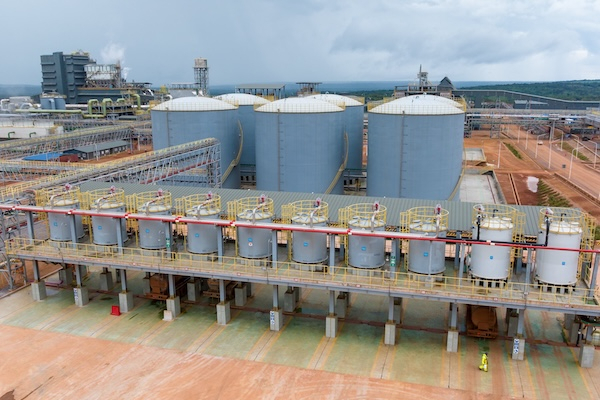
In addition to producing 500,000 metric tons per year of 99.7% pure copper anodes, Kamoa Copper’s smelter can generate 700,000 metric tons of sulfuric acid annually, a byproduct that is gaining value in the Congolese Copperbelt amid conflict in the Middle East.
Sulfuric acid is a key input in the leaching process used to extract copper from oxide ores. A significant share of Congolese output, estimated at 3.5 million metric tons in 2025, relies on such deposits, particularly in Lualaba and Haut-Katanga provinces. The availability of this input directly affects production volumes and operating costs.
So far, most of the sulfuric acid used in the region has been produced from imported sulfur. According to Robert Friedland, executive co-chairman of Ivanhoe Mines, which holds a 39.6% stake in Kamoa Copper, up to 80% of the sulfur imported into the Copperbelt passes through the Strait of Hormuz, a corridor now disrupted by the conflict in the Middle East.
“Over the past week, we have begun to observe an increase in the price of acid in the Congolese Copperbelt due to the lack of sulfur exported from the Middle East via the Strait of Hormuz. If supply remains constrained, prices should continue to rise,” Friedland said in a March 23 post on X.
This makes the Kamoa Copper smelter more important. Unlike most operators, the project processes sulfide ore, which does not require sulfuric acid. The refining process also produces it as a byproduct. This allows Kamoa to avoid the constraint and become a key supplier to the rest of the sector.
Additional revenue
According to Friedland, the smelter currently produces 1,600 metric tons per day of high-concentration sulfuric acid, sold for between $470 and $500 per metric ton to mining operations in the Congolese Copperbelt. He described the price as competitive, noting that even before the outbreak of the war in the Middle East, sulfur prices had risen sharply in recent months due to global supply constraints, reaching between $500 and $600 per metric ton in January depending on the region.
The situation is also boosting the project’s profitability. At current price levels, sulfuric acid sales could generate more than $300 million in annual revenue. This additional stream complements copper production, which is expected to reach between 370,000 and 420,000 metric tons in 2026. The smelter also allows Kamoa Copper to nearly halve its logistics costs by exporting copper anodes rather than concentrate, according to company executives.
By contrast, most other operators in the Copperbelt are directly affected by the shock due to their reliance on sulfuric acid. Higher input costs are weighing on margins and widening competitive gaps within the sector.
More broadly, this highlights a structural issue for the Democratic Republic of Congo: securing the industrial inputs needed to develop its mining resources. As the country strengthens its position as a major global producer of copper and cobalt, control over these inputs is becoming critical to its resilience.
Pierre Mukoko