





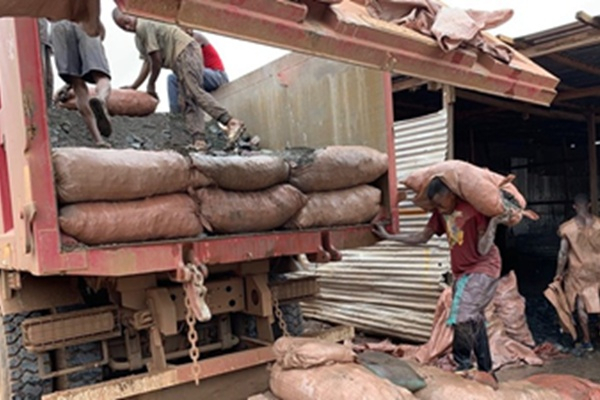
The Democratic Republic of Congo has suspended the activities of all artisanal copper-cobalt mineral processing entities across the country since December 19, 2025, under an order signed by Mines Minister Louis Watum Kabamba.
The decision directly targets the downstream segment that makes illegal mining economically viable. A processing entity is defined as an individual business, commercial company, or mining cooperative that uses mineralogical and/or metallurgical processes to produce marketable mineral products, such as concentrates or refined metals. These entities are authorized to source minerals from artisanal miners, traders, approved mining cooperatives, and even from operating mining concessions.
According to the order, the suspension is a precautionary measure aimed at enabling a comprehensive audit. An ad hoc commission has been established to verify the administrative, legal, and technical compliance of all processing entities, as well as the traceability and lawful origin of the minerals they process.
While a separate order will define the commission’s composition and operating procedures, the current text sets out a tight timeline. Suspended entities have ten days from notification to submit documentation proving compliance with legal and regulatory requirements, along with evidence of the lawful origin of their supplies. The commission will then have fifteen days from receipt of a complete file to conduct its review and must submit its report to the minister within seven working days after the audit ends. Any resumption of activity will depend on operators’ ability to demonstrate compliance.
The mines minister said the decision was justified by findings that several processing entities were sourcing minerals from industrial concessions without authorization from rights holders, fueling encroachment and fraud. He also said these entities were failing to comply with OECD due diligence standards, undermining the international credibility of Congolese mineral products.
Decision welcomed by industrial miners
The move has been welcomed by several industrial mining operators. A member of the Chamber of Mines of the Federation of Congolese Enterprises said many processing entities violate regulations and enrich criminal networks involved in mineral theft. The federation estimates that Eurasian Resources Group alone has lost close to $3 billion due to the spoliation of its deposits.
Beyond easing pressure on industrial concessions and restoring the credibility of Congolese exports, the measure could also strengthen the role of the state-owned Enterprise Générale du Cobalt. To enable its Gécamines subsidiary to fully exercise its legal monopoly over the trade in artisanal strategic minerals such as cobalt, President Félix Tshisekedi had called in June for strict enforcement of rules and sanctions against plants and processing entities illegally purchasing artisanal cobalt outside the EGC framework.
In the short term, the suspension could disrupt the artisanal mining ecosystem and create social tensions, particularly for cooperatives and local traders. The shutdown of artisanal copper and cobalt processing units is expected to cause an immediate loss of market outlets for the sector, with the overall impact depending on the state’s ability to enforce the decision.
Although artisanal mining contributes only marginally to national copper and cobalt output, it is estimated to employ between 1.5 million and 2 million Congolese people and indirectly support more than 10 million livelihoods, according to EGC estimates.
Pierre Mukoko