




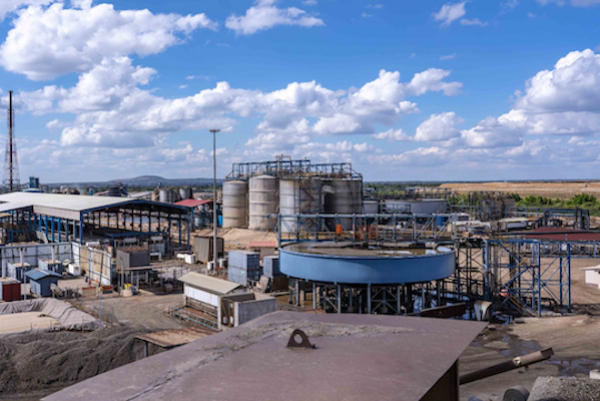
Ruashi Mining is facing fresh accusations over environmental and health impacts in several neighborhoods of Kolwezi, in the Democratic Republic of Congo's Lualaba province. The allegations were made public in Kinshasa on May 14, 2026, by the NGO Initiative Bonne Gouvernance et Droits Humains (IBGDH), which is calling for the suspension of the company's operations until protective measures for surrounding communities are put in place.
According to Donatien Kambola, the IBGDH's coordinator, residents living near the mining site have reported respiratory problems, persistent coughing, nosebleeds and skin irritations. The organization also cited strong odors and the rapid deterioration of rooftops in certain neighborhoods.
The IBGDH had already raised concerns about health conditions around the Ruashi Mining site in February 2026. In a publication focused on the Dilungu neighborhood, it reported nosebleeds among children and breathing difficulties attributed to dust and emissions from mining activities.
No independent official assessment has yet been made public to establish a direct link between the reported health problems and the company's operations. The case nonetheless raises fresh questions about the proximity of mining operations to residential areas in the Katanga copper-cobalt basin.
Establish no-go zones
In March 2026, the government announced the deployment of an inspection mission to a site operated by Tenke Fungurume Mining (TFM), a subsidiary of Chinese group CMOC, following pollution accusations relayed by civil society organizations. The findings have not been made public.
A few weeks earlier, Congo Dongfang Mining (CDM), a company active in mineral processing, was sanctioned with $12.6 million in fines and reparations for pollution-related violations in Lubumbashi.
These cases differ in nature and in how far they have progressed. But they reflect growing pressure over the environmental and social impacts of mining in Lualaba and Haut-Katanga provinces, at a time when the DRC is consolidating its central role in global copper and cobalt supply chains.
Through its recommendations, the IBGDH is urging authorities to strengthen oversight mechanisms for mining activities, conduct regular epidemiological studies in Kolwezi and establish no-go zones for mining operations near residential areas. The organization is also calling for the involvement of public authorities, financial institutions, international buyers and the company's shareholders in developing long-term solutions for affected communities.
Based in Kolwezi, Ruashi Mining specializes in copper and cobalt production. The company is controlled by Metorex, a subsidiary of Chinese group Jinchuan. According to 2025 mining statistics, the company exported more than 14,625 metric tons of copper cathodes during the year, highlighting its contribution to Lualaba's mining sector.
Boaz Kabeya