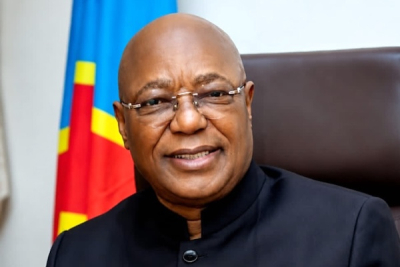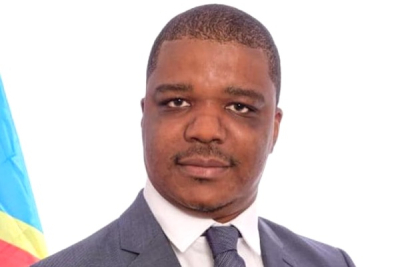





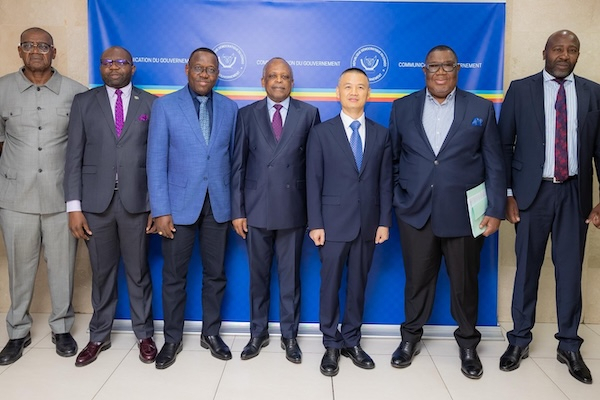
China Railway Resources Universal Limited (CRRU) is seeking to expand its strategic metals production in the Democratic Republic of Congo through a partnership with state mining company Minière de Bakwanga (MIBA). The project, presented on May 6, 2026, to Mines Minister Louis Watum Kabamba in the presence of MIBA Director General André Kabanda, aims to develop an integrated copper-cobalt complex in the Grand Kasai region.
According to materials presented by the Chinese delegation, the project would target the territories of Miabi and Kabeya-Kamwanga in Kasai-Oriental province. Planned production capacity ranges from 200,000 to 500,000 tonnes of copper per year, alongside an energy component combining hydropower and solar generation with installed capacity of between 250 MW and 500 MW.
The Mines Ministry described the initiative as a major strategic project for the mining, industrial and energy development of Grand Kasai, as part of efforts to implement presidential commitments to revive the mining and energy sectors.
MIBA Assets Back in Focus
The project draws on mining assets previously identified by MIBA. Several contracts signed between 2020 and 2021 with the company Comikas referenced copper-cobalt deposits across various permits held by the state enterprise in Kasai-Oriental, including permits PR 11858, PR 11859 and PE 410.
Those documents also indicated that the project’s mineral potential had yet to be fully confirmed. In one of the contracts, MIBA acknowledged that it did not have “sufficient information to determine the grades and quantities of copper-cobalt” present within the licence area. The document specified that exploration work would be required to establish “the quantity, quality and delineation” of potential resources.
The contracts also referred to exploration work aimed at identifying copper-cobalt deposits between the Lukula and Lubi rivers, northwest of the SACIM concession. It remains unclear whether that work was ever completed.
Despite the scale of the ambitions announced, several key parameters remain undisclosed. No official estimate of mineral reserves has been published, while the total project cost, development timeline, financing arrangements and the exact division of equity stakes between CRRU and MIBA have not been made public.
Visible Political Backing
The Mines Ministry said discussions focused on implementation arrangements for the project. Minister Kabamba reaffirmed “the government’s commitment to supporting strategic investments capable of contributing to the country’s economic transformation.”
He added that the project is receiving particular attention from President Félix Tshisekedi, who wants to see it move forward rapidly.
The involvement of CRRU, a subsidiary of the state-owned China Railway group, underscores the continued expansion of Chinese companies in the DRC’s strategic mining sector. Presentation materials linked the project to several flagship investments associated with China’s mining ecosystem in the country, including Sicomines, the Busanga hydropower dam and ore processing facilities.
Copper prices have maintained strong momentum for several months, supported by demand linked to electrification, electric vehicles, data centres and energy infrastructure. Copper prices reached record highs in 2026, briefly exceeding $14,500 per tonne in January, according to the International Energy Agency.
Several international organisations, including UNCTAD, estimate that the world will need to develop new large-scale mining projects over the next decade to meet rising demand.
Pierre Mukoko & Ronsard Luabeya