




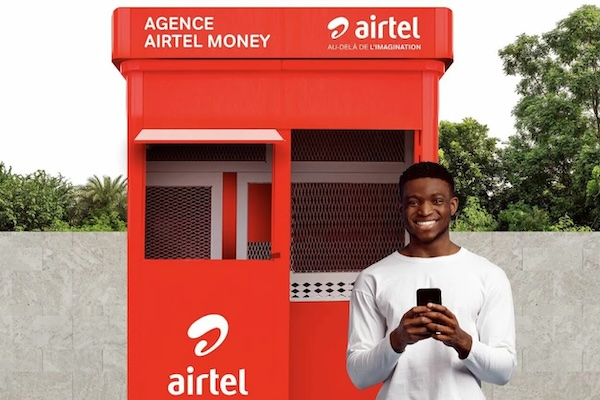
Airtel Money DRC, the financial services arm of Airtel DRC, posted a 42% jump in revenue to $194.8 million in 2025, up from $137.2 million the previous year, according to a report by Congo's postal and telecommunications regulator, the ARPTC, published April 10, 2026.
The Indian operator is now rapidly closing the gap with M-Pesa, Vodacom DRC's mobile money service, which has dominated the market since its 2012 launch. M-Pesa recorded $207.1 million in revenue in 2025, a 23% increase, according to the same data. The gap between the two players narrowed to $12.2 million from $31.3 million a year earlier. Airtel Money's average market share in mobile financial services transactions rose from 37.5% in 2024 to 40.8% in 2025, while M-Pesa's share slipped from 46% to 43.4%.
According to the GSMA, the global mobile industry association, even a slight increase in transfer or withdrawal fees can trigger a much sharper drop in the number of users or transactions. Fee levels therefore remain a key factor in users' choice of mobile money provider.
That pricing strategy helped drive Airtel Money's growth in 2025. In April 2024, the company announced a 30% cut in withdrawal fees and a 20% reduction in transfer fees. After the fee cuts, Airtel Money's active subscriber base grew 22.4% over the year to 11.1 million.
That growth, however, trailed that of Orange Money, the mobile money arm of Orange DRC, whose active customer base surged 50.4% to 7.7 million — the strongest expansion in the market, according to the ARPTC report. M-Pesa remained the market leader, with 15.4 million active subscribers, according to the regulator, which counts customers who have been active at least once in the past 90 days.
Internal billing advantage
Airtel Money's competitiveness in the Congolese market rests on a little-known internal arrangement. Between April 2024 and July 2025, Airtel DRC billed its mobile money subsidiary an average of just 0.61% of transaction revenue for the use of USSD codes, compared with 3.69% at Vodacom, 11.48% at Orange and 12.47% at Africell, according to monthly data compiled by the ARPTC.
The internal billing rate later rose more than fivefold, reaching 3.38% in August 2025 before settling at 2.90% in December. It nonetheless remained the lowest in the market throughout.
Airtel's ability to maintain a lower internal billing rate than rivals Vodacom and Orange stems from a leaner operating model inherited from Airtel Africa's expansion across 14 markets. The group, which reported 54.1 million mobile money customers as of end-March 2026 in its recently published annual accounts, operates on a shared regional technical platform and leverages its dominant position in mobile internet in the DRC. Airtel holds a 43.5% share of revenue and 38.9% of mobile data volumes in the country, making it the market leader in both categories, according to the ARPTC report.
The Congolese digital payments market is, however, evolving rapidly. On April 9, 2026, the Central Bank of the Congo announced a ban on cash payments in foreign currencies, effective April 9, 2027. The measure does not prohibit the use of the dollar, but requires dollar transactions to be processed through bank transfers, payment cards or electronic wallets. It is expected to boost mobile money transaction volumes in the coming quarters, in an economy that is more than 90% dollarized.
At the same time, U.S. fintech Wave, which counts 18 million users across Senegal, Côte d'Ivoire and Cameroon, has entered the DRC market and charges a 1% transfer fee. Its arrival is also expected to reshape the competitive landscape.
Idriss Linge, with Ecofin Agency