




After its December 2025 report, the World Bank on June 11 released a new study on the business climate in the Democratic Republic of Congo. Unlike its usual national-level assessments, the report examines conditions at the local level by comparing the experience of businesses in four cities: Kinshasa, Matadi, Kananga and Kisangani.
The study found that obstacles to investment and business development do not affect all cities in the same way. Business registration, construction permits, property transfers and commercial dispute resolution all reveal significant gaps between the national regulatory framework and its implementation at the local level.
According to the World Bank, the scores recorded by the cities surveyed remain low across the four areas assessed. Average performance remained below 40 points out of 100 for business registration, construction permits, property transfers and commercial dispute resolution. The result underscores the scale of reforms still needed.
The report said the DRC has established some relatively harmonized legal frameworks, notably through the adoption of OHADA law. However, the practical application of those rules continues to be hindered by weak public services, limited digitalization, administrative fragmentation, a lack of transparency and the persistence of informal practices.
Matadi, Less Restrictive
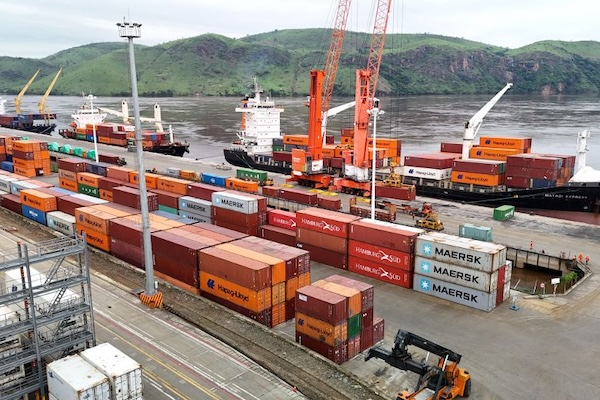
Among the four cities surveyed, Matadi emerged as the city with the least restrictive business environment. The port city performed better than the others in several areas, particularly business registration, property transfers and dispute resolution.
For business registration, Matadi recorded the shortest processing time at 41 days, compared with 70 days in Kisangani, 80 days in Kananga and 117 days in Kinshasa. The advantage should be viewed in context, however, as costs and administrative complexity remain high by international standards.
Matadi also ranked better in property transfers. The report gave it the highest overall score in that category due to stronger operational efficiency. Even so, procedures remain largely manual and dependent on in-person interactions with land administration offices.
The city also stood out in resolving commercial disputes, with an estimated processing time of 98 days, compared with 172 days in Kananga. In a country where legal certainty remains a major concern for businesses, the gap highlights the importance of the performance of local courts and enforcement mechanisms.
Matadi is not immune to challenges. Construction permits represent a major weakness, with processing times reaching as long as 150 days, the highest among the cities surveyed.
Kinshasa, Better Equipped but Slower
Kinshasa presents a mixed picture. The capital has a larger number of institutions, government agencies and specialized service centers. However, that concentration of administrative structures does not always translate into greater efficiency for businesses.
Business registration can take as long as 117 days in Kinshasa, the longest delay among the four cities. Total costs can reach 261% of gross national income per capita, creating a significant obstacle to the formalization of economic activity.
The capital also performs poorly in property transfers. Processing times reach 84 days, compared with 49 days in Kisangani. The involvement of multiple layers of verification, particularly in certain land transactions, extends procedures and increases costs.
Kinshasa posted a better result in construction permits, with a relatively short processing time. The World Bank, however, qualified that performance, saying the speed may reflect informal practices or insufficient technical oversight rather than a fully efficient and transparent administration.
Kananga, the Most Constrained
Kananga appears to have the most difficult business environment among the four cities surveyed. It faces several weaknesses, including cumbersome procedures, weak public services, high costs and challenges in resolving commercial disputes.
In business registration, Kananga is not the slowest city, but it requires the largest number of procedures. Post-registration requirements significantly lengthen the process for entrepreneurs, particularly when obtaining certain administrative documents.
The city is also disadvantaged in construction permits, where costs are among the highest. As elsewhere, limited digitalization, the absence of electronic tracking systems and informal payments increase uncertainty for businesses.
The most concerning issue is dispute resolution. Kananga records the longest delay, with 172 days required to settle a commercial dispute. The report also noted low levels of confidence among businesses in the independence and impartiality of commercial courts.
Kisangani, an Intermediate Position
Kisangani ranks in the middle of the group. The city posted some comparatively better results, particularly in property transfers, where processing time is the shortest among the four cities at 49 days.
However, that performance does not offset broader weaknesses in the system. Procedures remain largely paper-based, with no digital land registries or integrated cadastre. Users must physically track their files, increasing the risk of delays and informal payments.
For business registration, Kisangani records a processing time of 70 days. The report nevertheless highlighted limitations linked to weak coordination among government agencies and the requirement for entrepreneurs to complete procedures with multiple public services.
Commercial dispute resolution also remains fragile. As in Kananga, a significant share of businesses surveyed expressed doubts about the impartiality of commercial courts.
Access to Financing, the Main Obstacle
Beyond differences among cities, the report identified challenges common to Congolese businesses. The primary challenge remains access to financing.
According to surveys conducted among more than 1,000 companies, 35.3% of respondents identified access to credit as their main obstacle. The constraint particularly affects small and medium-sized enterprises, which often lack sufficient collateral or a solid financial history.
Political instability ranked second, cited by 19.2% of businesses, followed by insecurity, theft and public disorder, which were mentioned by 17.5% of respondents. Electricity, competition from the informal sector, tax administration, corruption, taxes and customs procedures were also listed among the obstacles identified.
Land access represents another structural challenge. According to the World Bank, 65% of businesses consider access to land a constraint on their operations. In Matadi, that figure reaches 83.4%, despite the city's relatively stronger performance in some procedures.
Implementing Reforms
The report's message is clear: the DRC does not suffer solely from a problem of legislation. The main challenge lies in implementing existing rules.
Laws and regulations may be harmonized at the national level, but their application varies significantly from one city to another. The differences stem from the quality of local public services, the availability of service centers, digitalization, administrative capacity and the prevalence of informal practices.
The World Bank therefore recommends focusing reforms on implementation, including the full digitalization of business registration, integration of government systems, modernization of the GUPEC system, digitization of land registries and the cadastre, the introduction of digital case-management systems for courts, and more transparent publication of administrative fees, processing times and statistics.
The institution also called for stronger accountability mechanisms for public officials and intensified efforts to combat corruption.
The comparison of Kinshasa, Matadi, Kananga and Kisangani shows that national reforms must now be followed by more rigorous implementation at the local level. Without more efficient public services, digitized procedures and greater administrative transparency, regulatory progress will remain insufficient to sustainably improve the business climate in the DRC.
Pierre Mukoko & Boaz Kabeya