




The Congolese government is launching a pilot project to digitize border procedures in South Kivu. The stated goal is to reduce fraud, dumping and revenue leakage in a province where losses are estimated at nearly $33 million per month, according to the Ministry of Foreign Trade.
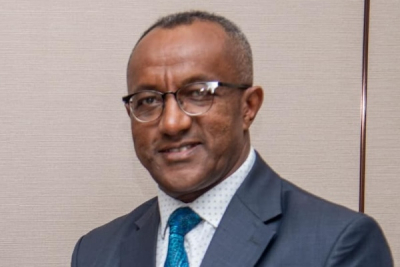
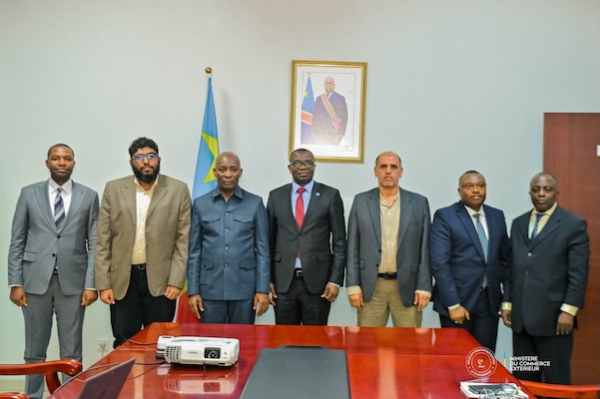
The initiative was discussed on June 17, 2026, in Kinshasa during a meeting between Foreign Trade Minister Julien Paluku Kahongya, South Kivu Governor Jean-Jacques Purusi Sadiki and Mohamed Eidha Awadh, chief executive officer of Azania Group.
The ministry said Azania Group would contribute Tanzanian expertise in the digitization of border procedures.
According to the official announcement, the future system is intended to replace paper-based procedures with digital processes. It is expected to improve the monitoring of cross-border trade flows, strengthen the traceability of operations and enhance the collection of taxes linked to border trade.
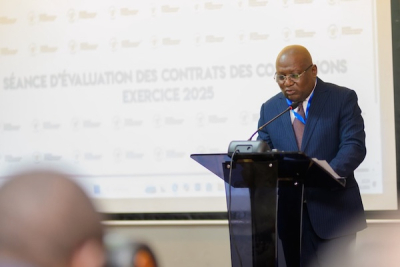
South Kivu will serve as the pilot province for the initiative. The ministry said an assessment will be carried out within 45 days to evaluate the effectiveness of the system and determine whether it should be gradually rolled out nationwide.
For Kinshasa, the issue is both fiscal and economic. The digitization of border procedures is being presented as a tool to combat revenue leakage and as a way to help the provincial government raise resources needed to address security and development challenges, particularly infrastructure projects.
The initiative comes amid broader efforts to modernize cross-border trade in the Great Lakes region. Since Oct. 30, 2024, the Democratic Republic of Congo and Burundi have been implementing the Simplified Trade Regime, known as RECOS, at the Kavimvira border post on the Congolese side and Gatumba on the Burundian side.
The mechanism, implemented under the Common Market for Eastern and Southern Africa (COMESA), is designed to simplify customs clearance procedures and reduce transaction costs for small cross-border traders.
According to the Burundi Revenue Authority, 66 products originating from the Democratic Republic of Congo and Burundi benefit from simplified customs procedures under the regime.
RECOS is also intended to enable faster and more transparent border crossings. According to ACP, an assessment conducted in June 2025 by the Congolese Ministry of Foreign Trade and the South Kivu provincial government noted that the mechanism sets an initial threshold of $500 in goods per trader per day that are exempt from customs duties.
The Democratic Republic of Congo already has experience in digital cooperation with Tanzania in monitoring trade flows. An interconnection between the Congolese and Tanzanian customs administrations allows the exchange of data related to goods in transit exported to the Democratic Republic of Congo through the port of Dar es Salaam.
The newly announced project in South Kivu appears to follow the same approach: using digital tools to improve the monitoring of trade flows, reduce fiscal losses and generate more reliable data on cross-border trade.
At this stage, however, it remains a pilot project. Its actual impact will depend on effective implementation, the cooperation of customs and border agencies, interoperability with existing customs systems and the authorities' ability to oversee small-scale traders without increasing administrative burdens.
Boaz Kabeya