




The Democratic Republic of Congo has begun a review of its 2018 law governing public-private partnerships (PPPs), as the government seeks to bring the framework closer to international standards.
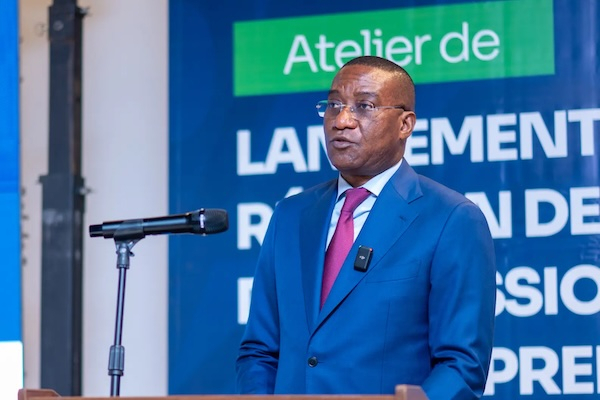
Planning and Development Aid Coordination Minister Guylain Nyembo launched the review process on Dec. 15 in Kinshasa. Officials said the reform aims to align the PPP regime with standards promoted by the World Bank, the African Development Bank and regional bodies including UEMOA, SADC and COMESA, while building on progress achieved under the existing law.
The government also plans to strengthen technical expertise among national officials involved in structuring PPP projects.
Nyembo said the reform would draw on lessons from the implementation of the current framework, address identified shortcomings and incorporate international best practices to improve the country’s credibility with domestic and foreign investors. He added that effective PPP development requires a legal and institutional framework that is appropriate, transparent and legally robust.
Among the main weaknesses identified are limited institutional coordination, inadequate assessment of financial and climate-related risks, and gaps in the definition of project development stages. Nyembo also pointed to the low participation of local small and medium-sized enterprises, weaknesses in asset valuation and contract management mechanisms, and a tax regime that officials say falls short of international standards.
Despite these challenges, the 2018 law has delivered tangible progress. This includes the establishment of the PPP Coordination and Advisory Unit (UC-PPP) in October 2021 and the adoption of Decree No. 23/38 on Oct. 26, 2023, which set out implementation rules for the law.
The framework has also supported the development of operational tools such as project briefs, PPP guidelines, contract templates, standardised documentation and oversight instruments. More than 25 PPP projects were reviewed and approved between 2023 and 2025, alongside training for contracting authorities and the creation of a PPP project database and an initial project pipeline.
Ronsard Luabeya