




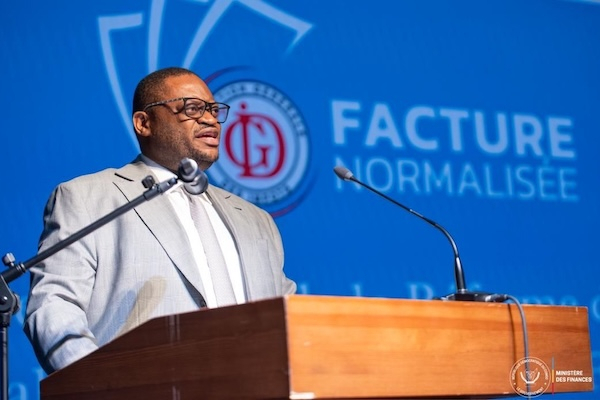
Democratic Republic of Congo Finance Minister Doudou Fwamba has rejected calls from the Federation of Businesses of the Congo (FEC) to delay the mandatory rollout of the standardized invoicing system.
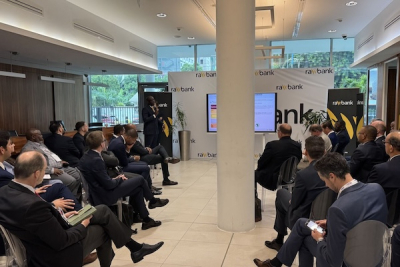
The system will still take effect on Dec. 1, despite repeated requests from the employers’ association for a postponement. “There will be no delay,” Fwamba said during a meeting with the FEC on Dec. 11. The talks focused on reviewing the rollout of the reform and making technical adjustments to ease its implementation.
According to an FEC report, the minister announced a series of transitional measures to address the technical and operational challenges raised by businesses. These include a two-month suspension of penalties linked to VAT deduction rights and fines, covering December 2025 and January 2026. The measure is to be formalized through an official letter from the finance ministry.
Fwamba said the government could not postpone the mandatory phase because the reform is part of commitments made to the International Monetary Fund (IMF). “This is a deadline we are required to meet under our international commitments with our IMF partners,” he said. He added that the government would remain attentive to companies’ concerns. The minister also said the reform serves strategic objectives, notably the digitalization of value-added tax (VAT), describing the lack of digitalization as a major failing.
The ministry is also considering a tax amnesty for companies that choose, in what the minister described as a “patriotic” move, to comply with the system and declare their true turnover. The measure would allow businesses to avoid retroactive tax reassessments that can extend back up to four years. Under Congolese law, the tax authority is entitled to reopen past tax filings and demand payment of outstanding amounts. The standardized invoicing system is expected to improve visibility into companies’ actual revenues, strengthening the effectiveness of this process.
The FEC said the minister also announced that a joint commission bringing together the finance ministry, the General Directorate of Taxes (DGI) and the FEC would begin work on Dec. 17. The body, made up of tax officials and corporate IT specialists, will be tasked with proposing solutions to each technical and operational issue identified. In addition, a special unit within the minister’s office will be created to respond to company inquiries by email within a maximum of 48 hours.
Fwamba also instructed the DGI to set a deadline for processing approval applications. If the administration fails to respond within that timeframe, approval will be deemed automatic, according to the FEC. Sessions of the Approval Commission were convened starting Monday, Dec. 15, to clear pending files.
Finally, the minister authorized companies that issue large volumes of invoices to integrate their billing systems directly with the DGI’s e-UF platform. This will allow invoices generated in corporate billing systems to be uploaded automatically to the tax authority’s platform.
Timothée Manoke