




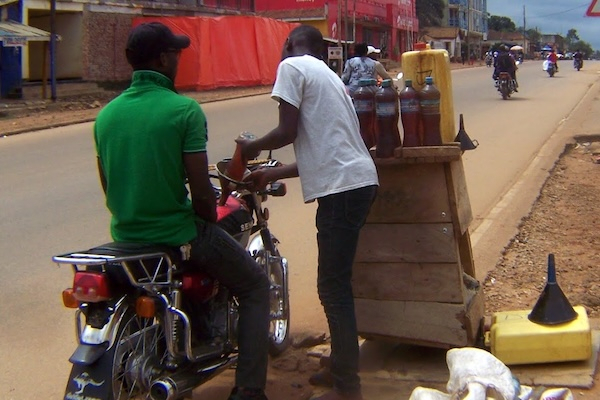
Small petroleum distributors in Muanda, in the Democratic Republic of Congo’s Kongo Central province, are warning that a sharp increase in provincial taxes could threaten their businesses.
According to the Congolese Press Agency (ACP), the levy imposed on small fuel traders has risen from 3,000 Congolese francs to 6,900 francs, more than doubling in a move operators describe as abrupt and difficult to absorb.
The vendors, commonly known locally as “Kadhafi,” say they are not opposed to paying taxes but want the increase to be introduced gradually to avoid putting additional pressure on already fragile businesses.
“A tax should not double overnight. We understand the government’s revenue needs, but a gradual approach would have allowed operators to adjust,” Serge Kamanga, an economic operator in the petroleum sector, told the ACP.
The increase comes as part of the introduction of a provincial tax targeting small-scale cross-border fuel trade in Kongo Central. The measure stems from a decree signed in March 2026 by Governor Grâce Nkuanga Masuangi Bilolo and was implemented on May 11 by provincial Hydrocarbons Minister Carole Kiatazabu Itambo.
Provincial authorities say the reform is intended to improve revenue collection and reduce illegal charges. Under the new system, joint checkpoints will be set up along National Road 1 (RN1) and some secondary roads to centralise inspections by authorised state agencies.
Small distributors say the higher taxes come at a particularly difficult moment, after fuel prices in the country’s western pricing zone — which includes Kongo Central — were revised upward. Petrol prices rose from 2,440 francs to 2,640 francs per litre, while diesel increased from 2,430 francs to 2,635 francs.
Operators also say harassment by officials and unofficial charges remain common along the Muanda–Kasangulu corridor despite government pledges to curb the practices. According to traders, these additional costs continue to raise operating expenses and weaken the local business climate.
The retailers are now appealing to the governor and the provincial hydrocarbons ministry to review the measure and find a compromise that would protect provincial revenues without forcing the smallest fuel traders out of business.
Ronsard Luabeya