




The Democratic Republic of Congo’s four main mobile operators have received unified telecom licences, a major reform aimed at boosting investment and competition in the fast-growing sector.
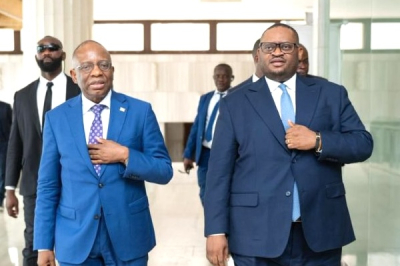
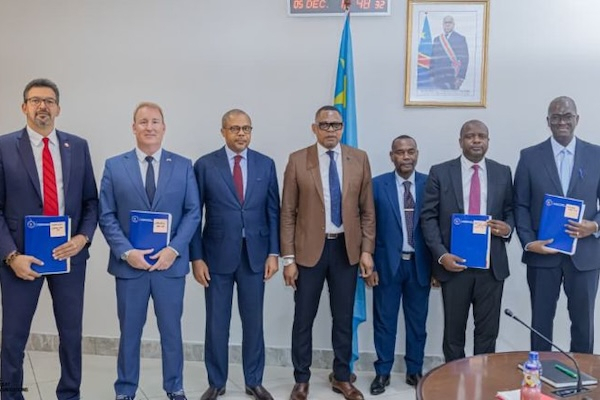
José Mpanda Kabangu, Minister of Posts, Telecommunications and ICT, formally issued the licences to Airtel, Orange, Vodacom and Africell during a ceremony in Kinshasa on Dec. 5, 2025. The reform, implemented under the 2020 telecommunications and ICT law, ends years of legal uncertainty for the operators, whose 2G, 3G, 4G, fibre and value-added service licences had been granted at different times under separate regulatory regimes.
Vodacom Congo’s chief executive, Khalil Al Americani, said the new framework represents an essential step in the evolution of the telecom sector in the DRC and provides a modern, technology-neutral system that will allow the company to deliver more innovation to Congolese consumers.
Unified licensing, which is used in many countries, allows operators to offer mobile and fixed services such as voice, internet and data under a single permit that is independent of technology. By adopting this model, the DRC removes remaining monopolies and opens the entire range of services to competition.
With a unified licence, operators can deploy new services such as converged fixed-mobile packages, business connectivity solutions, IoT services and early 5G preparation without undergoing a full licensing process for each individual technology. The added flexibility is expected to speed up commercial innovation and increase competition in pricing, service quality and coverage.
The reform also comes with stricter obligations. The licence terms set requirements for network coverage, service quality, subscriber identification and consumer protection. The Regulatory Authority for Post and Telecommunications of Congo (ARPTC), which is responsible for ensuring a stable regulatory environment for investors, will need to strengthen its monitoring and enforcement capacity.
The changes arrive as the market continues to expand. According to the ARPTC Observatory, mobile penetration rose from 56.7 percent to 61.84 percent between the first and second quarters of 2025, a 5 percent increase, with active subscriptions rising from 63.6 million to 69.4 million.
In the second quarter, Vodacom led the market with a 35.52 percent share of mobile subscriptions, followed by Orange at 30.37 percent, Airtel at 28.59 percent and Africell at 5.52 percent. Out of total sector revenue of 1.1 billion dollars at the end of June, Airtel held a 36 percent share, ahead of Vodacom at 32.2 percent, Orange at 28.1 percent and Africell at 3.5 percent.
In the second quarter, Vodacom led the market with a 35.52 percent share of mobile subscriptions, followed by Orange at 30.37 percent, Airtel at 28.59 percent and Africell at 5.52 percent. Out of total sector revenue of 1.1 billion dollars at the end of June, Airtel held a 36 percent share, ahead of Vodacom at 32.2 percent, Orange at 28.1 percent and Africell at 3.5 percent.
Mobile internet is becoming even more central to sector performance. By the end of June, it generated 594 million dollars, representing nearly 52.7 percent of total telecom revenue. The number of active mobile internet users reached 34.5 million in the second quarter, a penetration rate of 30.79 percent, while data consumption increased by 26.91 percent compared to the first quarter of 2025.
In this segment, Vodacom led by subscriptions at 36.4 percent, ahead of Airtel at 30.8 percent, Orange at 29.8 percent and Africell at 3 percent. By revenue, Airtel remained the leader with 41.6 percent, ahead of Orange at 29.5 percent, Vodacom at 24.7 percent and Africell at 4.1 percent.