




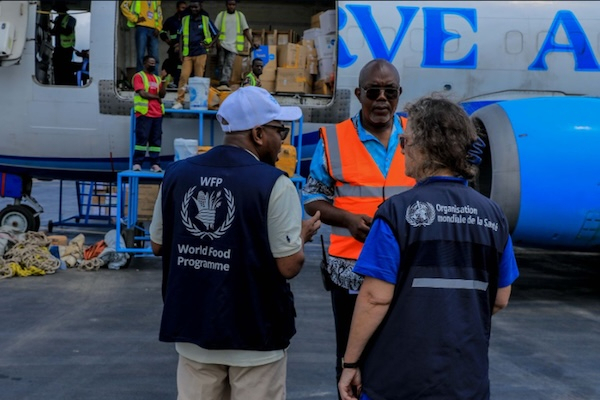
The Ministry of Transport, Communications and Regional Integration announced the immediate reopening of Bunia airport, nearly one week after its temporary closure following the Ebola outbreak reported in eastern Democratic Republic of Congo.
In a statement issued on June 1, 2026, the ministry said the decision followed health assessments conducted by the relevant authorities, notably the Ministry of Public Health, Hygiene and Social Protection. According to the authorities, the necessary conditions are now in place to allow a gradual and safe resumption of air transport operations.
Despite the reopening, the government is maintaining several health measures at Bunia airport. The Ministry of Transport requires systematic body temperature screening of passengers before boarding and upon arrival, handwashing or sanitization before entering airport facilities, and the immediate medical evaluation of any person presenting symptoms consistent with Ebola.
Travelers with a fever will not be allowed to board and must be referred to the appropriate health services for assessment in accordance with current protocols.
Positive signs
The government suspended all commercial, private and special flights to and from Bunia on May 23 to reduce the risk of the outbreak spreading. The reopening comes as health authorities report encouraging developments, including the first patient recoveries and expanded treatment capacity.
During an exchange hosted on X by Actualite.cd, Professor Jean-Jacques Muyembe, director-general of the National Institute of Biomedical Research (INRB), said the current outbreak remained comparable to previous Ebola outbreaks in the DRC. He stressed the importance of assessing the evolution of the situation based on confirmed cases rather than suspected cases alone.
During the discussion, the scientist referred to approximately 290 laboratory-confirmed cases, a figure that has since been updated by health authorities. He also said the outbreak was unlikely to exceed 1,000 confirmed cases, adding that stabilization between 300 and 400 cases remained possible if response measures were strengthened.
Drawing on the DRC's experience managing multiple Ebola outbreaks since 1976, he further said that stronger contact tracing and surveillance efforts could help bring the outbreak under control within two to three months.
Vigilance maintained
Another positive signal emerged on June 1 from the World Health Organization (WHO). After meeting President Felix Tshisekedi at the African Union City complex, WHO Director-General Tedros Adhanom Ghebreyesus announced the recovery of the first five Ebola patients. He also said a 60-bed treatment center was being built in Bunia to strengthen patient care capacity.
However, epidemiological data published on June 1, covering the situation as of May 31, 2026, show that the outbreak remains active. Authorities have recorded 321 cumulative confirmed cases, including 48 deaths among confirmed patients. A total of 238 confirmed patients are receiving treatment, while 116 suspected cases are under investigation and another 104 individuals remain in isolation.
The report also notes six recoveries recorded on May 31, as well as a contact tracing rate of 43%. In total, 23 health zones across three provinces — Ituri, North Kivu and South Kivu have reported cases. The Logo health zone has been newly affected.
Health authorities are therefore urging continued vigilance. They report community resistance in Bunia and Nizi, persistent rumors that are undermining trust in response teams, and security constraints that continue to limit humanitarian access in several areas.
Timothée Manoke