




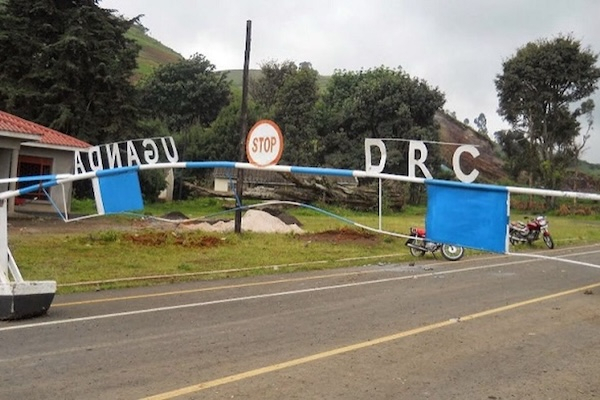
Ugandan nationals with valid passports are now exempt from entry visa requirements in the Democratic Republic of Congo (DRC) for stays of up to 90 days. The measure was announced in a directive issued by the Directorate General of Migration (DGM) to all border posts across the country, ordering its immediate implementation.
The decision is intended to facilitate the movement of people between the DRC and Uganda. It also forms part of efforts by both countries to deepen economic integration, as cross-border trade has intensified in recent years, particularly in border regions.
According to data compiled by the Bank of Uganda in its 2024/2025 annual report, the DRC officially imported Ugandan goods worth $542.74 million during the 2024/2025 fiscal year, a 29% increase from the previous fiscal year.
The Ugandan central bank also estimates informal trade at $419.46 million, bringing the total value of Ugandan exports to the DRC to approximately $962.2 million. The figures underscore the growing importance of the Congolese market to Uganda's external trade.
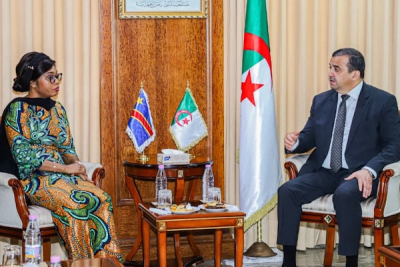
The measure comes several weeks after Congolese President Felix Tshisekedi made an official visit to Uganda on May 11, 2026. Freedom of movement was among the topics discussed between Tshisekedi and his Ugandan counterpart, Yoweri Museveni.
In a joint communique issued after the meeting, the DRC welcomed the visa exemption Kampala granted to Congolese citizens in January 2024. Kinshasa pledged at the time to accelerate the implementation of a reciprocal measure for Ugandan nationals before Aug. 31, 2026.
Closed borders
In January 2024, Uganda removed visa requirements for Congolese citizens visiting the country for up to 90 days. The move was part of the regional integration drive championed by the East African Community (EAC), which the DRC officially joined in 2022.
Kinshasa had not, however, immediately adopted an equivalent measure for Ugandan nationals. The absence of reciprocity fueled frustration at land border crossings between the two countries. Congolese travelers reported in some cases making payments at certain crossing points that lacked a clear legal or regulatory basis.
The exemption now granted by the DRC should help reduce that source of friction and support both governments' efforts to facilitate trade and improve mobility for business operators within the regional integration framework.
The measure's implementation nevertheless coincides with a particular public health situation. On May 21, 2026, Uganda announced the temporary suspension of direct flights to and from the DRC, as well as cross-border public passenger transport, to limit the risk of spreading an Ebola outbreak reported in eastern Congo.
On May 27, Kampala announced the temporary closure of its border with the DRC, with immediate effect. "Given the continued spread of the Ebola outbreak in the DRC, Uganda is temporarily closing its border with the DRC with immediate effect," said Dr. Diana Atwine, a senior official at Uganda's Ministry of Health.
The practical effects of the visa exemption on travel between the two countries are therefore likely to become more visible once the current health restrictions are lifted.
Timothée Manoke