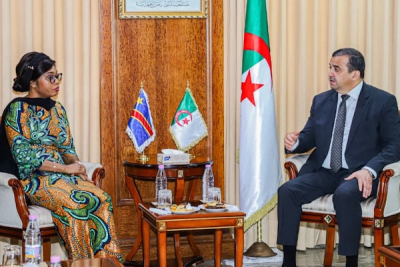





The Democratic Republic of Congo's government adopted a draft decree on Friday expanding the country's list of strategic minerals, a move that would subject several additional commodities to higher mining royalties.
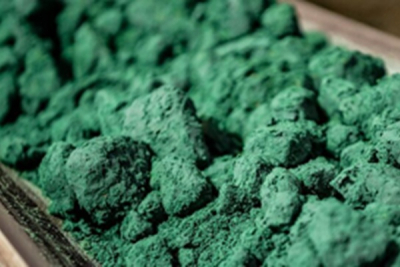
The text supplements decree No. 18/042 of Nov. 24, 2018, which designated cobalt, germanium and colombo-tantalite, or coltan, as strategic minerals. The new draft adds tantalum, niobium, tungsten, lithium, uranium and rare earths to that list.
"This text takes into account the evolution of international critical raw materials markets and the growing importance of several mineral substances for strategic industries, emerging technologies and the nuclear energy sector," the cabinet communiqué said. The government said the objective is to allow the DRC to derive greater value from the strategic importance of its mineral resources.
Once published and in force, the decree would alter the fiscal treatment of the affected substances. In the DRC, strategic minerals are subject to a 10% mining royalty, compared with 3.5% for non-ferrous metals. For the operators concerned, the change could translate into higher levies owed to the state on minerals newly classified as strategic.
Mining companies affected by the measure have not yet publicly detailed the implications for their operations.
Impact on Manono project
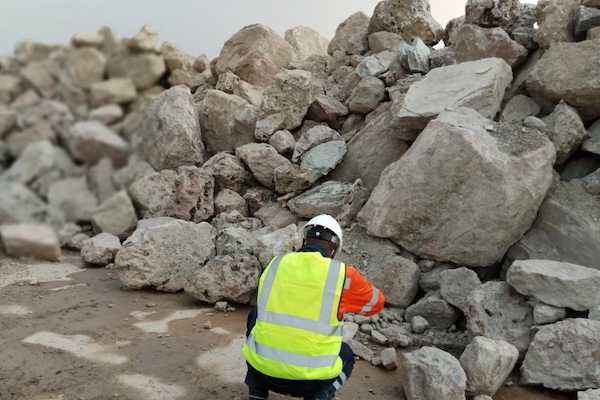
The decision to classify lithium as a strategic mineral comes as Zijin Mining prepares to ramp up its Manono North-East lithium project in Tanganyika province. According to information published by the company, Phase I of the project, with a capacity of 5 million tonnes per year, plans the progressive commissioning of the dense medium separation system between March and June 2026. The crushing and flotation system is expected by end-September 2026, while the smelter is to be commissioned in stages between September and end-December 2026.
Updated Zijin data show the project is being developed by the Manono Lithium joint venture. Jinxiang Lithium, a subsidiary of the Chinese group, holds a 54.9% stake, compared with 35.1% for Congolese state company Cominière and 10% for the Congolese state.
The future mine is designed for a total extraction and processing capacity of 5 million tonnes per year, with expected output of around 1 million tonnes of spodumene concentrate annually. That concentrate would then be processed into 100,800 tonnes of crude lithium sulfate.
Beyond Zijin, other players are likely to monitor changes to the regulatory framework. Among them is KoBold Metals, which is currently conducting exploration work in the DRC in search of new lithium deposits. The U.S. company has announced a $50 million exploration program in the country.
Regarding the other substances covered by the draft decree, recent mining statistics record production or export activity linked to coltan, wolframite and monazite, associated respectively with tantalum, tungsten and rare earths.
The regulatory shift confirms Kinshasa's intent to capture more value from critical minerals. Its practical impact will depend on the decree's publication, its implementing provisions and the response of the operators concerned.
Pierre Mukoko