




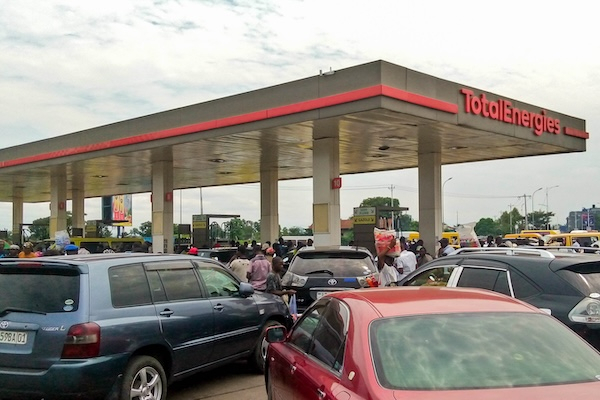
Long queues formed at gas stations across several districts of Kinshasa on March 23, 2026, as persistent rumors of an imminent fuel shortage prompted drivers to rush to distribution points and stock up as a precaution.
The surge in panic buying put pressure on stations, sharply increasing demand. According to accounts collected on the ground, some stations experienced temporary stockouts.
Congestion at fuel stations also spilled over into traffic. On the morning of Tuesday, March 24, large crowds at the BAT station on Avenue Poids-Lourds in Kingabwa, in the commune of Limete, worsened gridlock already typical at that hour.
Congolese authorities have nonetheless sought to reassure the public about near-term fuel availability following the outbreak of the security crisis in the Middle East. Hydrocarbons Minister Acacia Bandubola reiterated those assurances after visiting SEP Congo facilities on March 23. “I want to reassure the population that there is no fuel shortage in Kinshasa or elsewhere in the country. Stock coverage is assured, according to data provided by SEP Congo,” she said.
Series of measures
In a joint communiqué published on March 23, the ministries of National Economy and Hydrocarbons announced a series of measures aimed at securing supply. These include reducing certain costs related to the import and transport of petroleum products, as well as strengthening the advance payment mechanism for companies in the sector to support cash flow and ensure continuity of imports. The authorities also plan to speed up customs clearance procedures to improve product availability on the market.
The measures follow decisions taken at the 82nd Council of Ministers meeting on March 13, 2026, where the government stated that available stocks could meet the country’s needs through June. Several shipments of petroleum products are also expected in the coming weeks to bolster inventory levels.
According to a March 9 statement, the Ministry of Hydrocarbons had already begun preparations to build a strategic stockpile of at least 50,000 metric tons of fuel, including both ground and aviation fuels. The initiative aims to secure national supply amid disruptions to international energy markets linked to security tensions in the Middle East.
Ronsard Luabeya