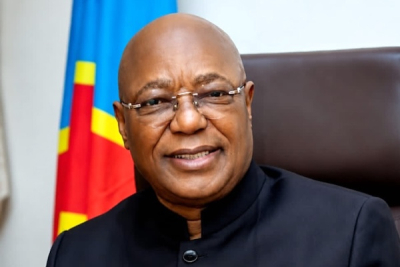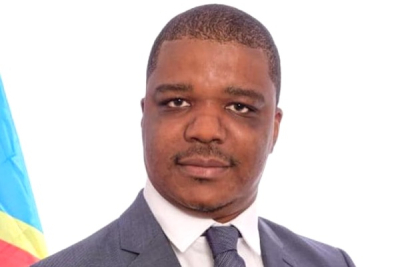





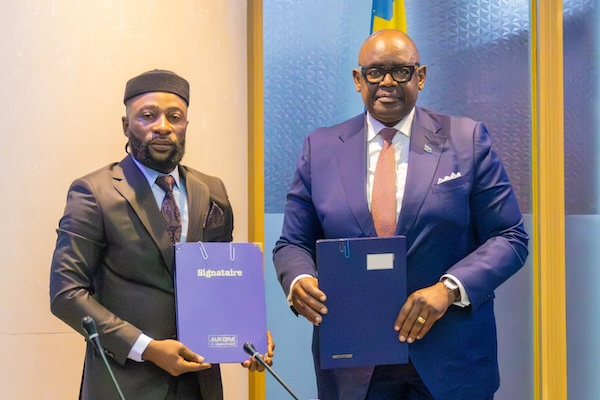
Mines Minister Louis Watum and ONYO-BT SARL Chief Executive Bryan Tshibanda signed a memorandum of understanding on June 12, 2026, to launch a pilot electricity supply project for the Minière de Bakwanga (MIBA) plant and residential community in the Democratic Republic of Congo.
The pilot project would use power generated at Lupatapata in Kasai-Oriental province and is intended to assess the ability of ONYO-BT's energy solution to meet the needs of a mining site before any potential expansion to other locations across the Greater Kasai region.
MIBA could become one of the first mining sites to test the technology, which remains largely undocumented in the country.
For several months, ONYO-BT has said it has been developing an autonomous electricity generation solution at Lupatapata that does not rely on conventional energy sources and does not produce smoke emissions.
"We have nine strategic minerals that the company exploits outside the country. We have installed laboratories to transform these minerals into semi-electronic components, and these components are then brought back into the country. At our workshops in Kinshasa and elsewhere, we are able to produce an energy core, and this energy core effectively generates power in an unlimited manner...," a company technician was quoted as saying by the Congolese Press Agency.
Institutional Support
In February 2026, ONYO-BT announced the arrival of equipment intended for the production and distribution phase of its energy installation. The company said at the time that the facility would have a total capacity of 610 megawatts, distributed across several production units.
At this stage, however, the information available does not make it possible to independently establish the exact nature of the process, its actual available capacity, its level of grid connection, or its production cost.
Contacts between ONYO-BT and the Ministry of Mines began before the memorandum was signed. In late May 2026, company officials presented the technology to the mines minister, highlighting in particular its potential for mining sites located far from major power grids.
That meeting had already raised the possibility of collaboration with mining operators in the country. Through the memorandum, the Ministry of Mines intends to provide institutional support to ONYO-BT SARL, particularly in the procedures required to obtain authorizations from the relevant authorities.
The partnership is part of the government's stated objective of diversifying energy infrastructure to support the mining sector. However, several uncertainties remain. Neither the detailed implementation timetable, nor the financing arrangements, nor the amount of capacity that could actually be made available to MIBA has yet been disclosed.
Boaz Kabeya