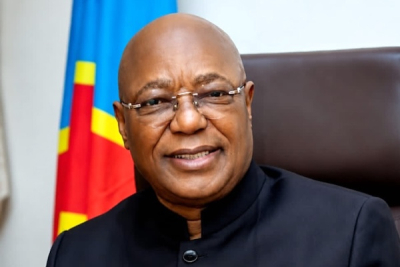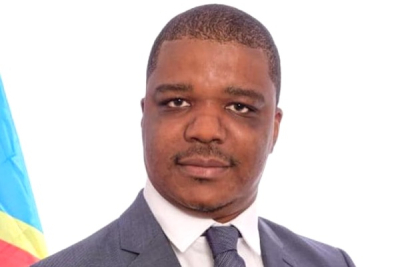





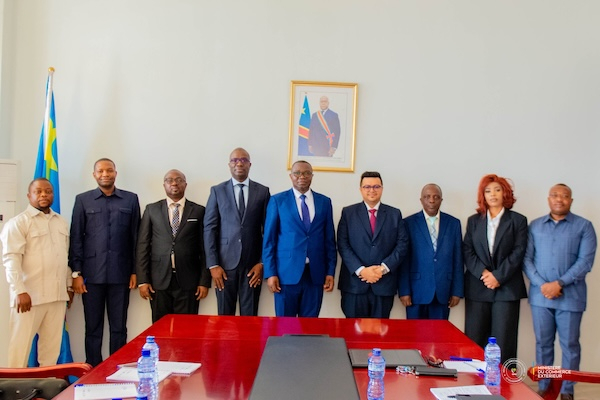
DR Congo’s Minister of Foreign Trade, Julien Paluku, met Rawbank executives on May 4, 2026, following earlier talks with the outgoing British Ambassador to the Democratic Republic of Congo, Alyson King.
“The objective is to turn British diplomatic commitments into tangible support for our farmers,” Paluku said.
He said Rawbank is considering targeted support for local producers across six value chains: coffee, cocoa, rice, corn, cassava and palm oil, with technical assistance from the International Finance Corporation (IFC).
In March 2026, Rawbank raised $265 million from investors led by the IFC, alongside British International Investment (BII), Proparco and other partners. The package includes a $165 million senior credit facility and a $100 million risk-sharing agreement.
The IFC is also expected to provide advisory services to strengthen Rawbank’s capabilities in areas such as climate finance, agricultural finance and support for women entrepreneurs.
According to the IFC, the program could finance at least 1,500 additional small and medium-sized enterprises over the next four years, particularly in sectors such as telecommunications and fast-moving consumer goods.
Paluku said he wants the program directed toward the coffee, cocoa, rice, corn, cassava and palm oil sectors.
“We emphasized the need for targeted support for post-conflict areas to ensure the recovery is inclusive and reaches all provinces,” he added.
This points to a focus on eastern provinces, where agriculture is seen as a driver of economic recovery and stabilization.
In its latest report on the DRC, published in March 2026, the World Bank said that between 2020 and 2024, about 71.9% of total loans went to private companies, mainly in mining and telecommunications. Agriculture receives less than 5% of bank credit.
Boaz Kabeya