




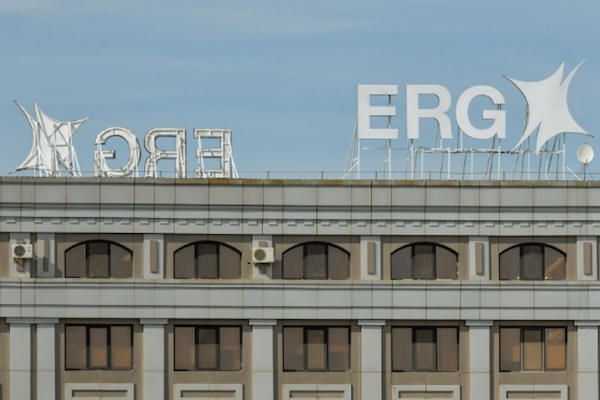
Kazakh mining group Eurasian Resources Group (ERG), which operates copper and cobalt assets in the Democratic Republic of Congo (DRC), announced a major restructuring of its shareholder base on May 22, 2026, marking the exit of two founding shareholders from the group.
Patokh Chodiev and the family of Alexander Machkevitch, both founding members alongside the Kazakh state, sold their respective stakes of 18.6% and 20.7% to Nature Energy Solutions Ltd., a company controlled by Kazakh businessman Shakhmurat Mutalip. Following the transaction, the Kazakh state retains its 40% stake in ERG, while Nature Energy Solutions becomes one of the group's principal private shareholders with 39.3%. The remaining 20.7% stays with the heirs of businessman Alijan Ibragimov.
ERG did not disclose the financial terms of the transactions. Several international media outlets, including the Financial Times as cited by The Insider, reported a deal valued at around $1.4 billion.
In a statement, ERG said the restructuring aims to “strengthen the group’s resilience,” improve governance efficiency and support its long-term growth strategy. The group added that the changes would affect neither its day-to-day operations nor its commitments to employees, partners and host states.
Russian ties under scrutiny
For the DRC, the shareholder reshuffle could spark sensitive questions. The country hosts several of ERG’s strategic copper and cobalt assets — two minerals central to the global energy transition — and has in recent months strengthened ties with the United States.
According to several international media outlets, Shakhmurat Mutalip has ties to Russian financial figures targeted by Western sanctions since the start of the war in Ukraine. The Insider reported that the Kazakh businessman has relationships with several figures in the Russian banking sector, including VTB chairman Andrey Kostin, as well as oligarch Alisher Usmanov.
According to the same sources, Mutalip’s interest in ERG has drawn the attention of the U.S. State Department, which is reportedly concerned that a portion of the group’s strategic assets in the DRC could come under Russian influence.
ERG has previously faced similar geopolitical complications in the DRC. In 2022, the group attributed delays in the development of the Kalukundi copper-cobalt mine — held by Swanmines, a joint venture with state miner Gécamines — to financing difficulties linked to credit lines with Russian banks affected by international sanctions. Those delays fueled tensions between the two shareholders.
In September 2025, during President Félix Tshisekedi’s visit to Kazakhstan, Gécamines and ERG signed a cooperation agreement that resolved several years of disputes over Swanmines.
Kalukundi as first test
That agreement led to a restructuring of Swanmines’ capital. Gécamines’ stake was raised from 25% to 49%, while ERG’s share was reduced from 75% to 51%. ERG also committed to completing, within one year, a feasibility study for the construction of a processing plant at Kalukundi.
How ERG delivers on that commitment will be an early test of the practical impact of the group’s new ownership structure on its DRC operations. If the group confirms its investments and accelerates project implementation, the restructuring could be presented as a stabilizing factor. Conversely, any further delays could revive questions about the group’s financial and strategic capacity to develop its Congolese assets.
The DRC holds a central place in ERG’s African ambitions. According to the group’s 2025 financial results, Africa accounted for approximately 24% of its earnings before interest, taxes, depreciation and amortization (EBITDA). ERG says it aims, over the next three to five years, to achieve annual production of around 300,000 tonnes of copper and more than 20,000 tonnes of cobalt.
In the DRC, that strategy is built around the assets of Boss Mining, Frontier, Comide, Swanmines and Metalkol RTR, which the group describes as one of its principal tailings reprocessing projects.
Assets under pressure
ERG faces another major challenge in the DRC: securing its concessions. Since 2024, several of its sites have been affected by repeated incursions from organized networks of illegal miners, particularly at Comide, Boss Mining and Metalkol.
An investigation published in May 2026 by Africa Intelligence said these intrusions are costing ERG nearly $2 billion per year and are also generating significant revenue losses for the Congolese state, which is itself exposed through Gécamines, a 49% shareholder in Boss Mining.
In response, the Kazakh group is exploring several avenues to regain control of its concessions. On Feb. 10, 2026, ERG signed a memorandum of understanding with the Entreprise Générale du Cobalt (EGC), a Gécamines subsidiary tasked with overseeing artisanal cobalt mining in the DRC. The partnership aims to gradually relocate artisanal miners to specially designated mining zones away from the group’s industrial concessions.
Another option under consideration involves strengthening cooperation with the Inspection Générale des Mines (IGM), headed by Raphaël Kabengele. According to Africa Intelligence, ERG is seeking to leverage the agency to intensify its fight against illegal mining networks operating on its concessions.
The case of Metalkol illustrates the tensions surrounding the group’s mining assets most clearly. Third-party operators have reportedly taken control of part of the tailings contained in the basin exploited by the company, allegedly with the backing of networks benefiting from political and security protection. ERG says the situation threatens the mine’s operational lifespan and could result in several billion dollars in lost revenue.
Against this backdrop, ERG’s ownership restructuring is more than an internal corporate matter. It comes at a time when its Congolese assets are under pressure on three fronts: geopolitical, fiscal and security. For Kinshasa, the challenge will be to determine whether the new shareholder balance can help ERG stabilize its investments, honor its industrial commitments and better secure its operations. For ERG, the DRC remains a strategic pillar — and one of its most exposed operating environments.
Timothée Manoke