




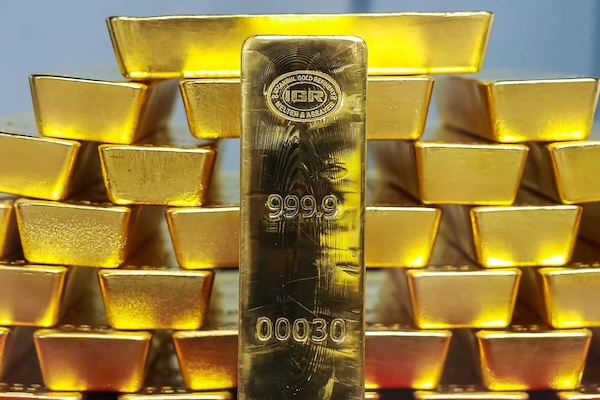
The Democratic Republic of Congo’s central bank has begun building gold reserves, marking a shift in its reserve strategy. It received its first shipments of raw artisanal gold from state-owned DRC Gold Trading SA, which it will refine for inclusion in its reserves.
In a Monetary Policy Committee statement published on April 9, 2026, Governor André Wameso said the move aims to “diversify international reserves, strengthen confidence in monetary policy and build a buffer against market fluctuations.”
The initiative is based on a partnership signed in February 2026 between the BCC and DRC Gold Trading, under which the central bank purchases a share of artisanal gold output. Until now, the DRC’s reserves were mainly held in foreign currencies, particularly the U.S. dollar, with little or no physical gold.
The arrangement uses a centralized supply chain: DRC Gold Trading oversees collection, certification and tracking before transferring the gold to the central bank, which then adds it to its reserves. The company aims to channel up to 15 metric tons of artisanal gold this year, up from 2.3 metric tons in 2025.
Through this mechanism, the BCC aims to position itself as a key buyer and capture output that largely flows through informal networks. Its success will partly depend on whether the prices offered to producers can compete with those available in parallel markets.
Separately, authorities are working to establish a national system to track gold flows and transactions. Proposed by President Félix Tshisekedi at a Council of Ministers meeting on Feb. 20, 2026, the system would connect licensed traders with the central bank and the mining administration, with the aim of securing transactions, routing payments through the formal banking system and enabling real-time monitoring of traded volumes.
Ronsard Luabeya