




The governments of the Democratic Republic of Congo and South Korea, alongside UNICEF, launched a $5 million multi-sector project on April 8, 2026, in Kinshasa.
According to a joint statement, the funding will support access to essential services, including health, education and water, in a province where living conditions have steadily worsened.
Within the next seven days, the project will provide cash transfers to 4,500 households, or about 22,500 people. This mechanism, increasingly used in humanitarian responses, provides a short-term economic boost. By putting cash directly into communities, it supports basic consumption, stimulates local markets and sustains informal trade. The statement did not specify the amount allocated to this component.
Beyond immediate relief, the program focuses on key sectors to support economic recovery. In education, it will give 4,500 children and adolescents access to alternative learning and vocational training. This highlights a major concern in a province where more than 1.3 million children are out of school, undermining long-term human capital development.
In parallel, 5,760 children affected by violence are expected to receive comprehensive care, including psychosocial support. This component, often overlooked, is seen as essential to help communities re-engage in economic activity.
The project also includes the construction of 40 water points, providing safe drinking water to 38,000 people. Beyond the health impact, this will help restore basic conditions for economic activity by reducing time spent collecting water, improving household productivity and making communities safer.
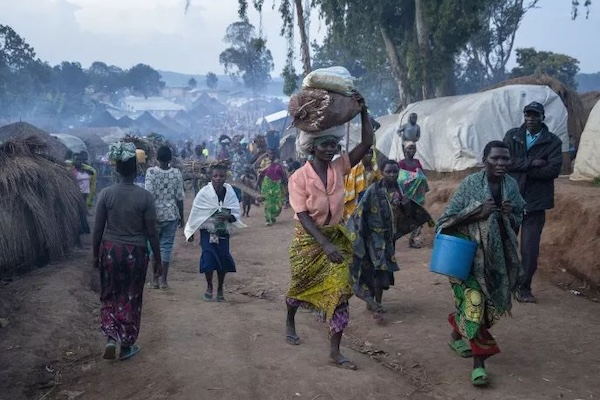
Ituri province continues to face a complex crisis. As of August 2025, it was home to around one million internally displaced people and 700,000 returnees living in difficult conditions, according to the statement. The same source said violence has risen sharply, with a 46% increase in serious violations of children's rights in the first half of 2025, deepening instability and hindering economic recovery.
Boaz Kabeya