
Copper Intelligence released the first drilling results from its Butembo copper project in the Democratic Republic of Congo on July 1, 2026. The results had originally been expected in early May, according to the timeline the company released when it launched its exploration campaign.
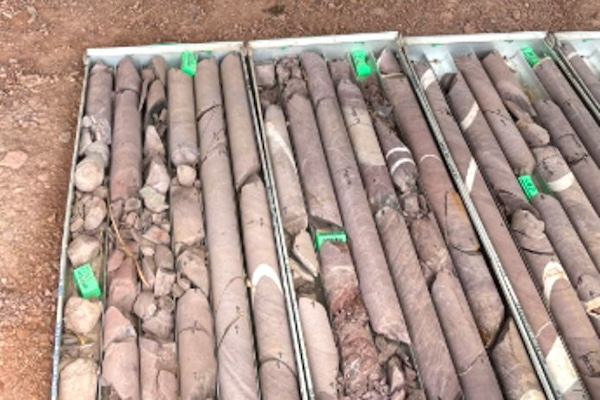
The results cover the first two drill holes completed during the initial phase of the program. According to Copper Intelligence, the first hole intersected 7.55 meters of mineralization beginning at surface, with an average indicative copper grade of 5.96%.
The figures are based on preliminary on-site measurements using a portable XRF analyzer.
The second hole, drilled about 100 meters from the first, intersected two separate mineralized intervals: 3 meters grading 0.24% copper, followed by three meters grading 1.89% copper at a greater depth, according to data released by the company.
These initial results confirm the presence of copper mineralization in the recovered core samples. They also show significant variation in grades, depending on location and depth. The first hole returned a high-grade interval from surface, while the second showed more irregular mineralization.
Results Yet to Be Confirmed
Copper Intelligence views the results as an initial indication of lateral continuity between the two drill holes. However, the data remain preliminary and will need to be confirmed through independent testing at accredited laboratories.
The company said the samples will be sent to accredited laboratories for confirmatory analysis. That step will be critical to validate or revise the grades obtained using portable XRF, a screening tool widely used to guide exploration but not to replace certified laboratory assays.
The drilling results should also be considered alongside the initial data that drew attention to the project. Before drilling began, Copper Intelligence relied in part on surface samples and material collected from artisanal pits, with reported copper grades reaching as high as 18% in some areas.
Those high grades increased interest in the Butembo project, but they were based on isolated samples. On their own, they were therefore insufficient to establish the continuity, size, or representativeness of the mineralization across the project.
Next Steps
These initial drill holes mark a more significant milestone because they provide data collected from below the surface. However, two drill holes are still insufficient to define a mineral resource that complies with international standards or to demonstrate the project's economic viability.
At this stage, Butembo remains an exploration project. The next phase of work will seek to complete additional drilling, verify the lateral and vertical extent of the mineralization, define the geometry of the copper system, and determine whether the observed grades can be replicated across a broader area.
The results are an important step for Copper Intelligence, which is seeking to position Butembo as one of its flagship assets in the Democratic Republic of Congo. However, moving from encouraging drill intercepts to a commercially viable mining project will still require substantial technical work, independent laboratory analysis, and, if warranted, a resource estimate prepared in accordance with internationally recognized reporting standards.
Timothée Manoke