




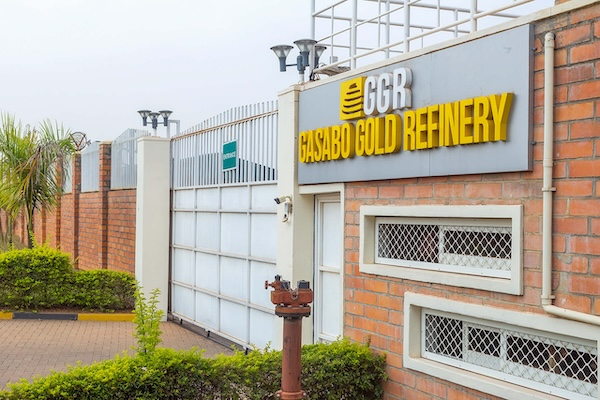
The United States has imposed new sanctions on a Rwandan gold refinery accused of processing gold illegally extracted in eastern Democratic Republic of Congo from areas controlled by M23 rebels.
The measures, announced on June 25, 2026, by the U.S. Treasury Department, target Kigali-based Gasabo Gold Refinery LTD as well as several individuals and entities linked to its operations. Washington described the sanctions as part of a broader effort to disrupt networks that profit from illicit mineral trade and fuel instability in the eastern Democratic Republic of Congo.
The U.S. Treasury said Gasabo Gold Refinery was part of a network that sourced and refined gold illegally mined in the Democratic Republic of Congo. The network moved the gold from eastern Congo to Rwanda, where it was refined in Kigali.
U.S. authorities said the network relied on actors linked to the M23 and the alleged support of elements of the Rwandan armed forces. According to the Treasury, at least 60 kilograms of gold worth several million dollars were funneled through the network to Gasabo Gold Refinery during the first months of 2026.
Those sanctioned include Jean Malic Kalima, identified as chairman of Gasabo Gold Refinery, and Bosco Kayobotsi, the company’s chief executive officer. The sanctions also target several companies associated with Kalima, including Bugambira Mines LTD, Wolfram Mining and Processing LTD, and Rwinkwavu Mining Corporation LTD.
The sanctions were imposed under U.S. Executive Order 13413, as amended, which authorizes measures against individuals and organizations accused of contributing to instability in the Democratic Republic of Congo, including by providing material, financial or logistical support to armed groups.
Washington Steps Up Pressure
The latest action comes as Washington increases pressure on individuals and organizations accused of fueling the conflict in eastern Congo. Since early 2026, the United States has expanded sanctions targeting military officials, armed groups and business networks linked to the illicit exploitation of natural Congolese resources.
On March 2, 2026, the U.S. Office of Foreign Assets Control sanctioned the Rwanda Defence Force and several Rwandan military officials over their alleged support for the M23. On April 30, Washington also sanctioned former Congolese President Joseph Kabila, accusing him of supporting the M23/AFC. On June 2, commanders from the FDLR and the M23 were also added to the sanctions list.
The latest measures build on the pressure Washington has maintained since the Washington Accords for Peace and Prosperity between the Democratic Republic of Congo and Rwanda were signed in December 2025. The United States says it expects both governments to honor their commitments, including ending support for armed groups operating in eastern Congo.
Gold at the Center of the Conflict Economy
The Gasabo Gold case underscores the strategic importance of gold in the conflict economy. Because it is easy to transport and conceal, refined gold can readily enter legitimate commercial supply chains, making it one of the most sensitive commodities in regional smuggling networks.
Washington says these networks allow armed groups to finance their operations by extracting, taxing or controlling illicit mineral production. In eastern Congo, they are closely tied to a protracted security crisis marked by mass displacement, weak state authority and the expansion of war economies.
The U.S. sanctions freeze any assets and interests of the designated individuals and entities that fall under U.S. jurisdiction. They also prohibit U.S. persons from conducting transactions with them. Non-U.S. actors may also face sanctions if they facilitate prohibited transactions or attempts to evade the restrictions.
For Kinshasa, the move sends an important diplomatic message. It reinforces the Congolese government’s longstanding claims that minerals illegally extracted in eastern Congo pass through neighboring countries before entering regional and international supply chains.
However, the practical impact of the sanctions will depend on how effectively they are enforced, the cooperation of financial and commercial intermediaries, and the ability of regional authorities to monitor mineral supply chains. While the latest U.S. measures increase pressure on those targeted, they are unlikely on their own to dismantle the gold smuggling networks operating across the region.
Ronsard Luabeya