




The North Kivu military governor's office in the Democratic Republic of Congo said on Tuesday that intercepted cocoa shipments, seized while attempting to cross the border illegally, will now be sold with the revenue used to build provincial infrastructure.
David Kamuha, chief of staff for the military governor, announced the policy during a ceremony presenting seized cocoa to provincial executives, according to a Nov. 25 publication from the governorship.
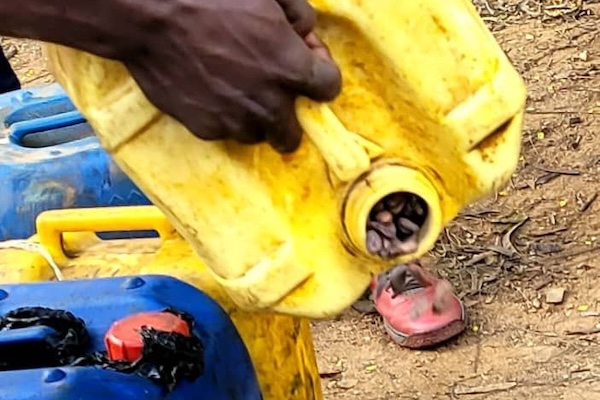
At the ceremony, control services presented a FUSO truck which Kamuha said was carrying fraudulent cocoa, along with 16 canisters supposedly containing palm oil but actually used to conceal cocoa destined for clandestine transport to Uganda.
The quantities currently held by provincial services were not revealed. However, available data illustrates the scale of the phenomenon. In early November, Kakule Justin, head of the National Office of Agricultural Products of Congo (ONAPAC) at the Kasindi border post, said 118 tons of cocoa had been intercepted in five months by control services.
He said smugglers operate mainly at night, using tracks that evade surveillance.
According to the official, the seized products mostly come from plantations in the Ruwenzori, Mutwanga and Bulongo sectors, areas with significant cocoa activity. The traders supplying these clandestine networks are seeking the slightly higher prices offered in Uganda, to the detriment of legal channels. This smuggling deprives the Democratic Republic of Congo of thousands of dollars in tax revenue, according to ONAPAC, while weakening the domestic cocoa market.
Timothée Manoke