




The Democratic Republic of Congo will launch an audit within 30 days to track mining export revenues from shipment through to foreign currency repatriation and government revenue collection. President Felix Tshisekedi issued the instruction at the April 24, 2026 cabinet meeting.
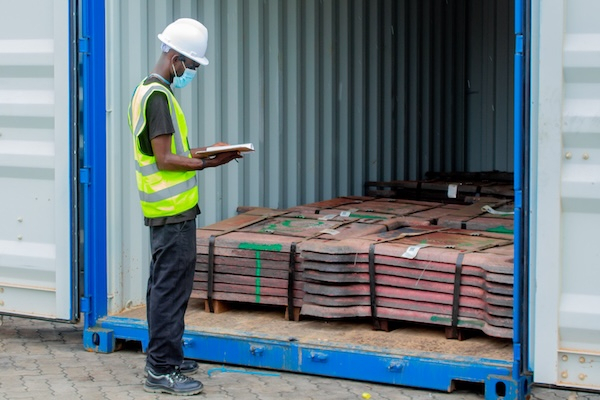
The decision comes as exports from the sector remain at elevated levels. According to the cabinet meeting minutes, the DRC exported 3,100,234 tons of copper and approximately 220,000 tons of cobalt in 2024. Copper exports rose further in 2025, reaching 3,403,006.63 tons.
For the government, the issue does not lie on the production side but in the state’s ability to capture revenues. The cabinet minutes point to weaknesses in the process from export through to revenue collection, as well as the failure to repatriate part of mining export earnings.
Repatriation requirements are already governed by existing rules. The Central Bank of Congo’s foreign exchange regulations require foreign exchange transactions to be registered and monitored through licensed banks, with relevant public agencies involved in the reporting framework. The revised Mining Code also requires mining title holders to repatriate their export revenues. During the investment recovery phase, operators may retain 40% abroad but must repatriate 60% into an account opened in the DRC. Once the investment is fully recovered, all revenues must be repatriated.
In 2025, the central bank tightened sanctions against mining and petroleum operators failing to meet their foreign exchange obligations. According to an analysis by AKILI Consulting, fines for non-declaration of foreign accounts were raised by more than 1,000%, while new penalties were introduced for certain practices, including false declarations and the use of shell companies.
Strengthening the traceability chain
The new audit will cover two areas: compliance with export revenue repatriation obligations, and the governance of joint ventures and state-owned mining assets. It will identify shortcomings, assess uncollected revenues and recommend corrective measures.
The president also called for the mandatory interconnection of agencies involved in the mining sector to be finalized. These include OGEFREM, the OCC, the DGDA, the Central Bank of Congo and commercial banks. The objective is to ensure that no export or import transaction escapes an integrated traceability system.
Ultimately, the authorities aim to track a single flow from the logistics document through to duty payments, foreign currency repatriation and effective public revenue collection. The first findings from this work are expected no later than June 15, 2026.
The reform aims to align the mining sector’s performance with stronger public revenue mobilization and increased foreign exchange reserves, which the government has described as a lever of monetary sovereignty.
Boaz Kabeya