




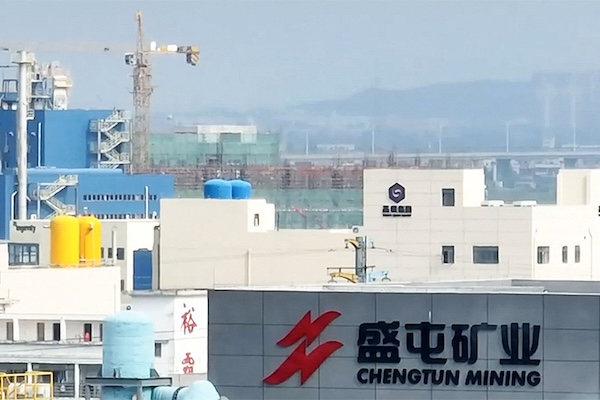
China's Chengtun Mining Group is deepening its presence in the Democratic Republic of Congo. After finalizing the acquisition of Loncor Gold, which owns the Adumbi gold project in Ituri, for C$267 million, the group is now targeting a copper-cobalt asset in Lualaba.
According to an announcement published on April 8, 2026, on the Shanghai Stock Exchange, Chengtun Mining plans to invest $300 million to acquire a 50% stake in Nkoyi Leopard Mining and Investment. The company holds 60% of the mining rights to a copper-cobalt project in Lualaba. The transaction would give Chengtun an indirect 30% interest in the project.
Chengtun does not identify the permit concerned in its announcement. Several details, however, suggest the asset is the Kabulungu project, held through Kabulungu Kamilombe Mining (KKM). These include its location in the Congolese Copperbelt, an area exceeding 10.9 square kilometers, and a mining permit valid until January 2040, according to records from the Congolese mining cadastre.
According to Africa Intelligence, KKM is owned 40% by Gécamines and 60% by Nkoyi Leopard Mining, which has ties to the Emirati firm International Resources Holding (IRH).
Chengtun highlighted the project's proximity to its existing industrial facilities in Lualaba, notably Chengtun Congo Mining (CCM S.A.), Chengtun Congo Ressources SARL (CCR), and Kalongwe Mining SA (KMSA). According to the company, the mine is located about 20 kilometers north of the CCR and CCM smelters and 51 kilometers southwest of the KMSA smelter. Its proximity to these facilities would facilitate ore transport and integration with the group's processing operations.
Chengtun said the proximity was one of the deal's main strategic advantages. The company is seeking to better integrate its mining and metallurgical assets in the Congolese Copperbelt, where it already operates processing facilities.
The announcement also states that, based on preliminary estimates from Chengtun's technical teams using available drilling data, the project has average grades of 1.66% copper and 0.67% cobalt. Chengtun added that the deposit exceeds the resource threshold under Chinese standards for large copper mines.
Timothée Manoke